

How does a minority manage to govern a majority that has never truly trusted it? This is one of the most troubling contradictions of our democracy.
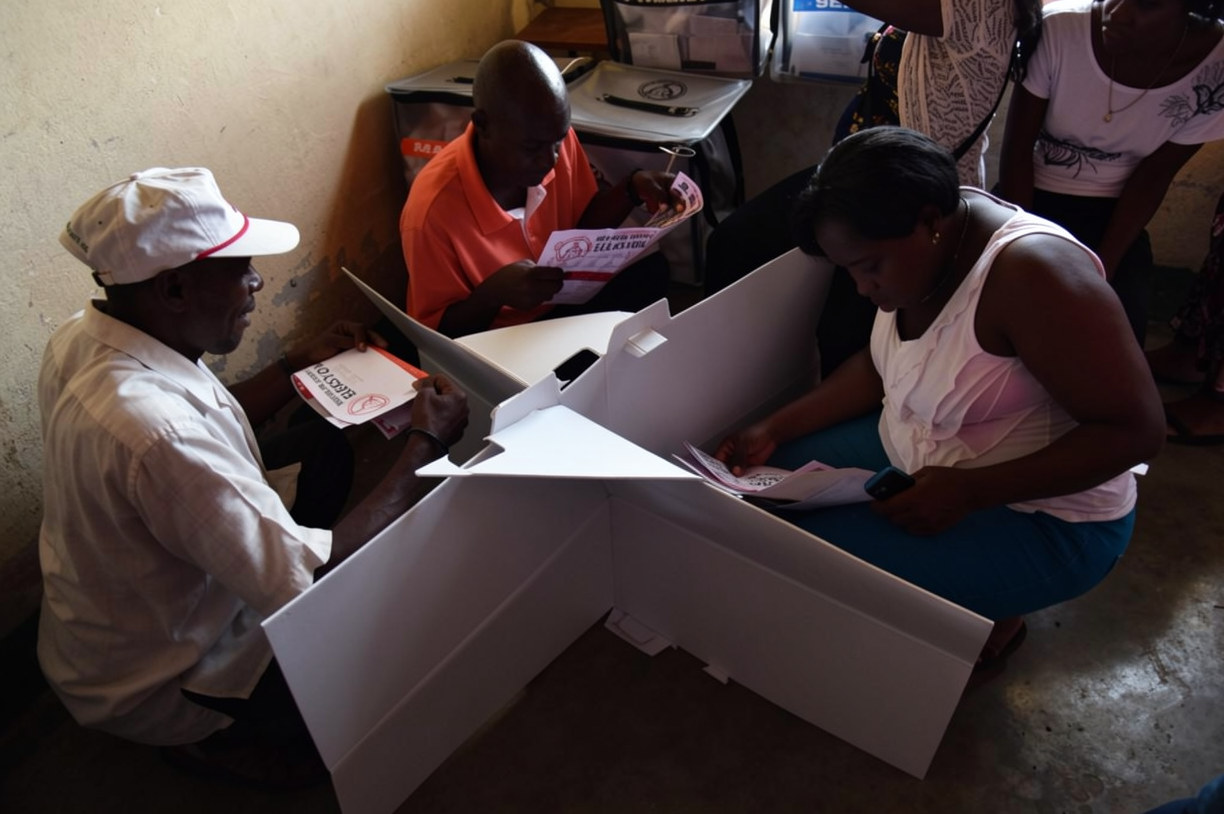
During the legislative elections of August 9, 2015, less than 20% of registered voters participated in the vote. In the presidential election of November 2016, participation remained extremely low. In other words, a small fraction of the electoral body participated in choosing leaders meant to govern the entire nation. Certainly, abstention does not automatically invalidate an election. But when it becomes massive, persistent, and accompanied by violence, it raises a fundamental question. Does the people still exercise their sovereignty, or is it gradually being confiscated?
Democracy Without Real Choices
The first problem lies in the political offer. Too often, Haitian electoral campaigns turn into competitions of personalities, slogans, and promises without any real government programs. How to combat poverty? How to fund education? How to rebuild the economy? How to restore the authority of the state? Precise answers frequently give way to seductive speeches.
Worse still, political engagement can become a dangerous enterprise. The reputation, family, and sometimes the lives of candidates are at stake. In such an environment, competent and independent personalities may hesitate to engage, while those who master intimidation tactics hold a significant advantage. We call for better leaders, yet we maintain a political environment that can discourage those we need.
When Fear Replaces the Ballot
The second confiscation is that of electoral freedom. When a citizen gives up voting out of fear of violence, when a candidate cannot campaign freely, or when armed groups disrupt electoral operations, democracy loses its substance. Violence then becomes a political instrument. It can serve to prevent some from voting, to coerce others, or to compromise the integrity of the ballot.
It is no longer enough to convince voters. Certain actors may seek to control the conditions under which they exercise their choice. And when an election takes place under threat, can we truly speak of popular will?
The Silence and Interests of Elites
The situation of economic, intellectual, and cultural elites fosters the third confiscation. Because responsibility does not stop with politicians and armed groups. Some economic elites may prefer a leader from whom they hope to gain particular advantages over one committed to strengthening institutions. Immediate interest then takes precedence over collective prosperity.
As for intellectual elites, their role should be to enlighten citizens. Yet, precarity, fear of reprisals, and sometimes personal ambitions can compromise their independence. Either they remain silent, or they exercise extreme caution that stifles the truth. After the election, their silence is bought with favors; failing that, they are quick to criticize, including over facts they previously kept quiet about.
Artists, too, suffer the constraints of an environment where taking a stand can cost contracts, reputation, or career. Their caution is often understandable. But a society also needs the critical freedom of its creators.
This is not about indiscriminately blaming all elites. It is about understanding how particular interests, economic dependencies, and silence can contribute to weakening public debate.
A Majority Subject to the Law of Minorities
We are faced with a paradox: the majority has the numbers, but certain minorities have the organization, resources, influence, and sometimes force. Politicians seek to gain power. Armed groups may seek to impose their will through violence. Some elites seek to preserve their interests. These actors do not necessarily form a united bloc, but their behaviors can contribute to the same outcome, which is the weakening of popular sovereignty.
The majority is not necessarily silent because it has nothing to say. It may be silent because it no longer has the means to make itself heard. Perhaps this is where the true democratic tragedy of Haiti resides. Democracy is not simply about organizing elections. It assumes that citizens can choose freely, that candidates can present their projects without intimidation, and that institutions guarantee the integrity of the ballot. We have long debated the tyranny of the majority. But Haiti imposes another question on us. How to prevent the tyranny of minorities when the majority is politically powerless?
The answer does not lie solely in new elections. It requires reconstructing the conditions of popular sovereignty: security, freedom, independence of institutions, and the quality of public debate. For a people do not become sovereign simply because a Constitution proclaims it. They become sovereign when no minority, no matter how wealthy, influential, or violent, can confiscate their will.
