

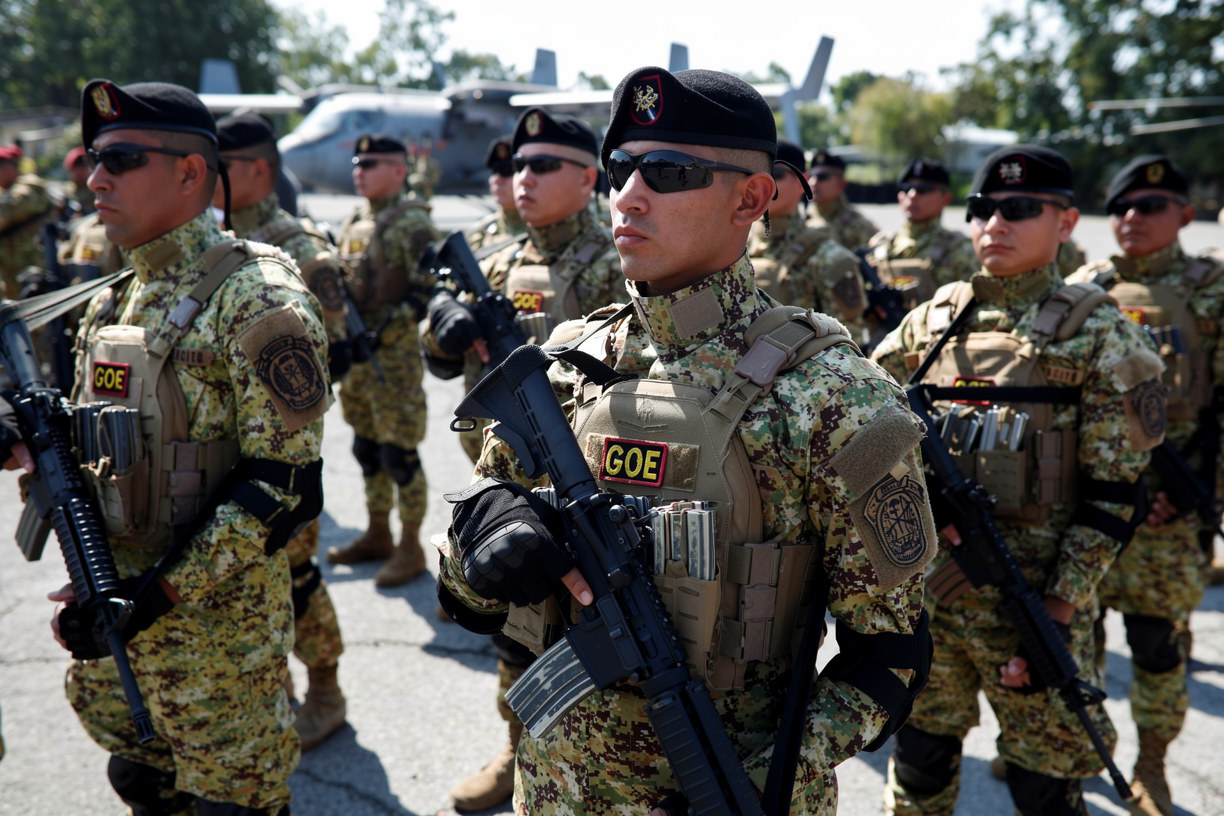
Bukele's intervention following the tragedy of Salvadoran soldiers
It is a sad habit in Haiti, particularly in Port-au-Prince, to learn via social media about the kidnapping of a loved one or a massacre by criminal gangs. The latest incident was in Kenscoff where over 160 people were murdered. This daily reality plunges families into anguish and severely affects the psychological well-being and mental health of Haitians, forced to live in constant fear of losing a loved one.
On Sunday, October 17, 2026, it was the turn of Salvadoran aeronautical technicians from the UN military mission in Croix-des-Bouquets. Initially, reports indicated a kidnapping. As hours passed, news emerged of gunfire from armed gangs against the Salvadoran vehicle, which would have been set ablaze with its occupants inside.
Severely charred bodies were reportedly found on Saturday, October 24, 2026. However, Salvadoran authorities contest that they correspond to the victims being sought. For its part, the UN Force states that it is not in a position to confirm the identities of the remains. In this circumstance, we express our deepest sympathies to the Salvadoran people and the families of the victims. The Salvadoran and Haitian peoples have suffered the ravages of violence, which in its criminal ramifications knows no borders. Today, security is an aspiration of the Haitian people. Drawing from its experience of violence, the Salvadoran people are better placed to understand the sufferings and setbacks of the Haitian people.
President Nayib Bukele, who has achieved significant success in the fight against gangs, seems to want to promote a similar approach in his intervention in Haiti. This intervention, however determined, could help contain certain manifestations of violence by eliminating criminal pockets. However, it cannot provide any lasting solution, as it must fit into a comprehensive strategy to dismantle the ties between officials and criminal networks, restore state authority, cut off supply sources, and reduce international dependency.
PM Alix Didier Fils Aime, responsible for the recruitment of mercenaries from Vectus Global, has allowed the renewal of an opaque contract worth a staggering 52 million USD to this firm of Erick Prince, which is unable to produce even minimal results regarding the security situation. Moreover, arms and ammunition purchases have been marred by corruption scandals according to local press. The latest report from UN experts indicated proven links between the government and armed groups that undermine institutions and strengthen criminal networks. Indeed, the PM profits from the climate of violence to extend his hold on power and prepare elections likely to favor his political family. This behavior, casting doubt on the credibility of the elections, will contribute rather to the normalization of disorder. The authorities still possess information on the execution of massacres resulting in hundreds of deaths but make no effort to counter them.
After the tragedy, the power demonstrated all the limits of its irresponsibility by taking more than three days to produce a response. Without informing the nation, the PM preferred to travel to Mexico via a private jet at the cost of 4,500 dollars an hour for the public treasury while Salvadoran troops land in the territory without any legal framework and without designating an interim.
President Abinader of the Dominican Republic remains ready to provide logistical support to UN forces, with a disastrous record on the security situation. Indeed, he has just promised President Bukele his support. Yet the most important contribution he should have made would have been to limit the supply of arms and ammunition to bandits coming from the Dominican Republic. The latest UN report reveals that over 900,000 items, mainly ammunition, have been diverted from the official stocks of the Dominican police to fuel the violence in Haiti.
Many Haitians perceive that sectors in the Dominican Republic, particularly ultranationalists, are driven by the idea that their country would benefit from the climate of instability in Haiti. However, considering its strategic interests, the Dominican Republic has more to gain from a stable and prosperous Haiti, and vice versa for Haiti. Nationalism does not necessarily rhyme with the denial and rejection of the other. In this globalized world, difference is a wealth.
Despite grand international promises to help Haiti overcome this chaotic situation, the international community is reluctant to loosen the purse strings. The Kenyan mission was a total failure, particularly financially, and the current mission struggles to materialize financial promises for its operations. Moreover, the international community relies on a façade of stability and prioritizes ties with the architects of chaos. The fact that the PM chose to renew the unproductive contract with mercenaries illustrates the predicted failure of the current UN mission.
President Bukele's intervention will be but a drop in this ocean of crime that has been built and maintained. The security crisis is inseparable from the failures of justice, the corruption of economic and political elites, transnational crime, arms supply circuits, and international interference, which must be examined rigorously.
