

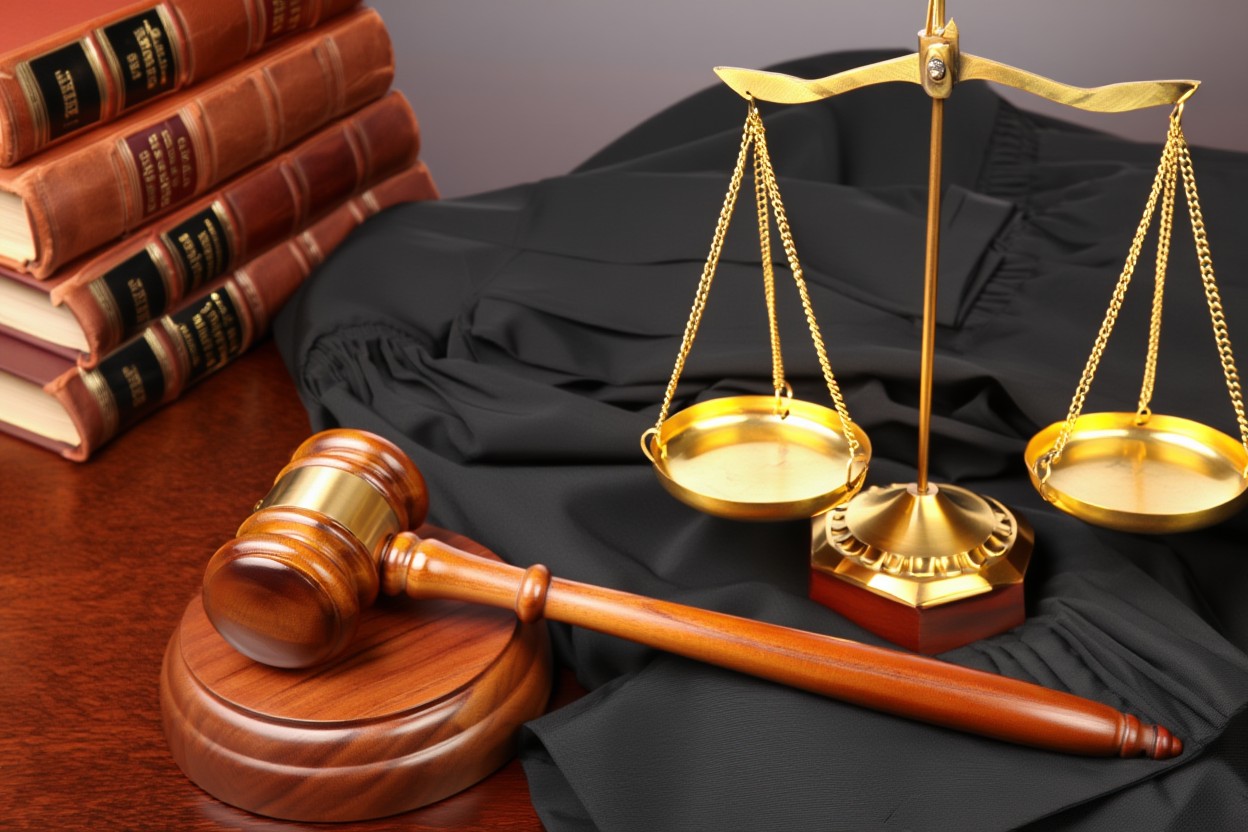
Does the government of Alix Didier Fils-Aimé truly want to strengthen the fight against corruption in Haiti? Or do certain provisions of the decree of December 17, 2025, concerning the organization and functioning of the High Court of Justice risk, on the contrary, compromising efforts to combat impunity at the highest levels of the state? These are legitimate questions that deserve a serious public debate.<\/p>
Adopted in a Council of Ministers under the presidency of the Transition Presidential Council, with the participation of Mr. Alix Didier Fils-Aimé's government, the decree of December 17, 2025, establishing the rules for the organization and functioning of the High Court of Justice was published in the official journal Le Moniteur<\/i>, in its special number 68. Since its publication, this text has raised questions and criticisms, particularly from various sectors of society and citizens concerned about the future of the fight against corruption and the respect for the principles of the rule of law.<\/p>
In a country like Haiti, where the weakness of institutions, the lack of transparency in the management of public resources, and the persistence of impunity fuel public distrust, any reform affecting the mechanisms of accountability of high public officials must be examined with the utmost rigor. The High Court of Justice cannot be regarded as just an administrative institution: it occupies a particular place in the constitutional architecture and in the mechanism for holding the highest dignitaries of the state accountable.<\/p>
A decree that raises fundamental questions<\/h2>
From the adoption of this decree, well before the publication on September 8, 2026, of the final report of the United Nations Expert Group, referenced S\/2026\/714, several Haitian civil society organizations denounced it, arguing that some of its provisions could obstruct the fight against corruption, which continues to weaken the state. These concerns deserve to be taken into consideration. However, to assess the scope of these criticisms accurately, it is essential to examine the contested articles, their compliance with the Constitution, and their concrete consequences on judicial procedures.<\/p>
An important question deserves to be asked: do the rules established by this decree truly facilitate the accountability of public officials suspected of serious wrongdoing, or do they risk making their prosecution more difficult? <\/p>
The stakes go far beyond a legal controversy. They concern the ability of the Haitian state to hold those in power accountable in its name. A democracy cannot consolidate if citizens feel that the rules of accountability are more stringent for the weak than for the powerful.<\/p>
The fight against corruption cannot tolerate ambiguity<\/h2>
Corruption is one of the major obstacles to good governance. It diverts resources intended for public services, undermines institutions, exacerbates inequalities, and breeds distrust toward authorities. In a country facing serious economic, social, and security challenges, any mechanism that could weaken accountability warrants particular scrutiny.<\/p>
The High Court of Justice must be understood from this perspective: that of constitutional accountability of the highest state officials. Its organization and functioning must guarantee clear, impartial procedures that comply with constitutional requirements. They must neither create unjustified privileges nor allow anyone to escape their responsibilities.<\/p>
It is essential, however, to distinguish between two realities: the existence of procedural rules designed to ensure a fair trial and the adoption of provisions that, in their application, could impede justice. Not all procedures obstruct the fight against corruption. But any provision capable of fostering impunity must be subject to examination, challenge, and, if necessary, correction through legal means.<\/p>
This is precisely on this terrain that the government must provide convincing explanations.<\/p>
The rule of law demands accountability from the rulers<\/h2>
The rule of law is not limited to the publication of laws and decrees in the official journal. It assumes that norms respect the Constitution, that institutions exercise their powers without unjustified interference, and that public officials can be held accountable for their actions within the framework of regular procedures.<\/p>
A legal text does not become legitimate simply because it has been adopted and published. It must also respect the hierarchy of norms, serve the public interest, and reinforce citizens' trust in institutions.<\/p>
If certain provisions of the decree of December 17, 2025, are likely to unduly restrict the accountability of high officials or excessively complicate the procedures provided for by the Constitution, the debate must not be stifled. It is up to legal experts, citizens' organizations, competent institutions, and the relevant authorities to examine the implications and propose necessary corrections.<\/p>
At the same time, no accusation should be considered established without an analysis of the specific provisions of the text. Legal rigor is essential, as the fight against corruption cannot be built on insufficiently demonstrated assertions.<\/p>
The government must be held accountable<\/h2>
The government of Alix Didier Fils-Aimé must understand that public trust cannot be decreed. It is built through transparency, consistency in decisions, and a manifest willingness to subject holders of power to the same requirements of legality and accountability.<\/p>
When a text concerning such an important institution as the High Court of Justice raises concerns, the authorities should not simply defend its publication. They should explain its objectives, justify the contested provisions, and demonstrate how the adopted framework protects constitutional principles rather than undermining them.<\/p>
If legal ambiguities exist, they must be clarified. If certain provisions are found to be contrary to the Constitution or detrimental to accountability, the legal mechanisms for revision or oversight must be mobilized.<\/p>
The fight against corruption requires more than mere statements of principle. It necessitates credible institutions, effective procedures, independent oversight, and constant political will.<\/p>
This text would have led, at the order of the Minister of Justice himself, to the suspension of several corruption cases involving certain high dignitaries of the state. Such a situation, if established, risks creating new obstacles to justice.<\/p>
In a country where impunity has long fueled distrust toward institutions, any reform affecting the accountability of rulers must undergo rigorous public scrutiny. The government has a duty to dispel doubts, to defend the constitutional conformity of its decisions, and to demonstrate that justice will neither be manipulated nor paralyzed.<\/p>
The High Court of Justice must neither be an instrument of political vendetta nor a refuge for officials who would have accounts to render. It must be an institution at the service of the Constitution, justice, and public accountability.<\/p>
Ultimately, the government would do well to repeal this decree to dispel suspicions and demonstrate that it does not intend to favor corruption, contrary to the fears expressed by several civil society organizations and many citizens, as well as by some actors from the international community. In Haiti, the fight against corruption cannot progress without an essential requirement: no one should be above the law.<\/p>
