

Restricting Haitians' access to property, employment, and rental ignores the labor needs of construction and agriculture, contradicts the American Convention on Human Rights (articles 1.1, 22, and 24), and undermines the development and brand image of the Dominican Republic.
The Dominican Republic has the right to control its borders, regulate immigration, and set conditions for working, renting, or investing. However, sovereignty should not erase the international responsibility of nations: decisions must respect international commitments and consider their consequences on image (soft power) and the national economy, among others.
According to published information, this project would require prior authorization from the executive branch for Haitian citizens to purchase real estate, including those who have acquired another nationality. It also foresees controls on rentals and employment restrictions, although some activities would remain open to foreigners with legal residency. This is a proposal, not yet a law in effect.
The legal question is serious. Articles 1.1 and 24 of the American Convention on Human Rights protect non-discrimination and equality before the law. Article 22 recognizes the freedom of movement and residence of individuals who are legally present in the territory, under the applicable legal conditions. A restriction specifically targeting a nationality must have an objective and proportionate justification; invoking the Haitian crisis is not sufficient on its own to justify any difference in treatment.
Why should a Haitian with legal residency, verifiable income, and lawful resources face an additional obstacle to invest compared to another foreigner in the same conditions? Being Haitian does not automatically make someone a dangerous investor. The risk should be assessed based on facts: the source of their money, their compliance with the law, and their activities, not solely their nationality.
For example, a Haitian with legal residency and verifiable funds wants to buy an apartment. If they face additional restrictions solely because they are Haitian, they receive the message that following the rules may not be enough to receive fair and predictable treatment.
This may also raise concerns among other foreign investors: "If today barriers are imposed on one nationality, could it be done to mine tomorrow?" This uncertainty can discourage investment.
Legal security must inspire confidence in clear, predictable rules applied without arbitrariness. This does not mean that a country cannot regulate foreign investment, but its restrictions must have reasonable justification.
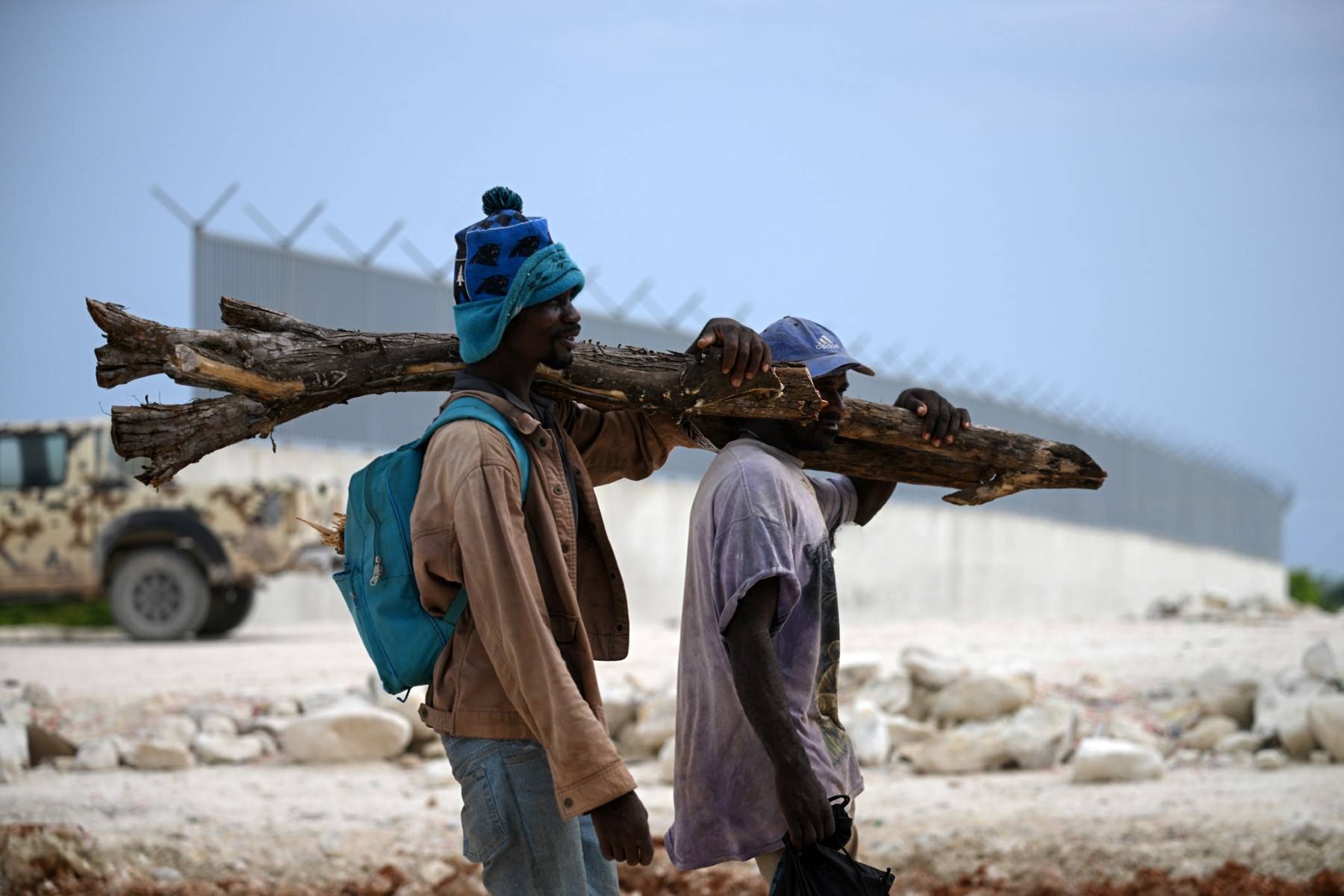
There is also an economic reality that no rhetoric can erase. According to the ENI-2017, presented by UNFPA and PUCMM, the activities of Haitian immigrants were concentrated in agriculture and livestock, with 34%; construction, with 26%; and commerce, with 16%. These are data from 2017, but they document tangible participation in essential sectors.
It is unnecessary to assert that there are jobs that only Haitians can fill. The problem is that there are tasks for which employers cannot find enough replacements under current conditions. In July 2025, representatives from the construction sector and agricultural producers were already alerting to a lack of workers related to expulsions. Acoprovi demanded temporary permits, and a banana producer reported a reduction of more than 50% in their workforce.
Reducing this workforce without a viable transition can delay construction projects, complicate harvests, increase costs, and harm Dominican entrepreneurs and consumers. Haitians also pay rent, buy food, and engage in business activities: when their economic activity is limited, it also affects those who sell them products, rent them housing, or employ them.
The international image of the country, its brand image, also deserves protection. When promoting the Dominican Republic as an investment destination while proposing nationality-based barriers, this sends a message of uncertainty to buyers, entrepreneurs, and foreign partners.
Proponents should explain what concrete problem each restriction solves, how much its implementation will cost, and who will bear the consequences. Political applause does not replace an impact study.
When a leader uses Haiti as a tool to mobilize voters and fuel resentment, they risk sacrificing Dominican interests for immediate popularity. This is political opportunism, and it deserves to be condemned.
I personally defend the Dominican Republic, the country that reached out to me to advance in my life, and I will always be grateful for it, just as I defend my country, Haiti, which deserves a chance to develop through Haitians like me. For me, the Dominican Republic is not an enemy country of mine, and I believe that defending the Dominican Republic, for Dominicans, mainly involves protecting its economy, development, legal security, and prestige. I do not believe that using Haiti or my compatriots as electoral fuel every time demonstrates a sense of state responsibility, as in the case of this discriminatory bill. I also do not believe that the Dominican Republic owes anything to my country; the development of our dear Haiti depends on us, the HAITIANS.
Long live the Dominican Republic! Long live Haiti!
God bless you all!
Serge Junior Fécu,
Haitian entrepreneur, legal resident in the Dominican Republic and the United Arab Emirates, founder of Immobilière 509 Real Estate, with activities in the Dominican Republic and Dubai. I studied International Relations (Services) for two years at the Universidad Católica Santo Domingo. My international real estate experience brings a perspective on foreign investment, legal security, and economic development.
