

(Haitians and Dominicans: why we need a third voice)
Breaking free from the alternative of national love and neighborly hatred. On both sides of the Haitian-Dominican border, there are discourses that mobilize history, identity, and sovereignty with such intensity that they sometimes end up reducing the other to a collective representation: the Haitian becomes "the problem"; the Dominican becomes "the enemy." However, these representations should not be conflated with the societies themselves. A people is not a stereotype. A nation is not a caricature. A history is not a slogan. And a disagreement between states does not necessarily constitute hostility between peoples. It is precisely between the most exacerbated nationalisms that a third voice must be able to emerge. It would be neither anti-Haitian nor anti-Dominican. It would not ask any people to abandon their identity, memory, or national interests. It would simply defend a fundamental principle: love of one’s country does not require the dehumanization of the neighbor. This third voice is that of knowledge, critical thinking, empathy, and human dignity.
1. Ignorance transforms differences into antagonisms
Collective hostility does not always arise from a deep understanding of the other. On the contrary, it can develop from fragmentary, selective knowledge or knowledge transmitted without contextualization. A generation may inherit a historical narrative without knowing the sources that ground it. It may receive painful memories without understanding the complexities of the events that produced them. It may transform an individual experience into a general truth and a conflict between institutions or governments into opposition between two populations. Thus, national caricatures are gradually constructed. The exception becomes the rule. The incident becomes the proof. The rumor becomes information. The emotion becomes certainty. And the human being disappears behind their national identity. This mechanism is particularly dangerous in the age of social media and artificial intelligence, where an image, a video, a statement taken out of context, or a simplified historical interpretation can circulate much faster than a scientific analysis. The primary educational responsibility, therefore, lies in reintroducing a fundamental distinction: What we feel is not necessarily what we know.
2. Patriotism and aggressive nationalism are not synonymous
Love for one’s country is legitimate. Defending its sovereignty is legitimate. Preserving its historical memory is legitimate. Defending national interests is legitimate. But none of these demands necessitate hatred of another people. It is therefore essential to distinguish between patriotism, nationalism, xenophobia, and dehumanization. Patriotism can be understood as attachment to a political community, its history, and its future. Nationalism, in its various forms, can emphasize the nation as a central political principle. However, when the construction of collective identity systematically relies on designating a neighboring people as inferior, dangerous, or intrinsically hostile, the debate leaves the realm of the legitimate defense of national interests and enters the realm of dehumanization. This distinction is essential for both societies. A Haitian can be deeply attached to Haiti without despising Dominicans. A Dominican can be deeply attached to the Dominican Republic without hating Haitians. A sufficiently solid national identity does not need a permanent enemy to exist.
3. History must be studied, not instrumentalized
Haitian-Dominican relations are marked by a complex history: independence, occupations, migrations, economic exchanges, political conflicts, cooperation, border tensions, and multiple human experiences. This history deserves better than simplifications aimed at fueling contemporary passions. Studying history means distinguishing: established facts from interpretations; primary sources from secondary narratives; events from their context; individual responsibilities from collective responsibilities; government decisions from popular behaviors; social memory from the scientific reconstruction of the past. It is possible to recognize historical wounds without transforming present generations into hereditary responsible parties. It is also possible to defend national memory without turning this memory into a permanent instrument of hostility. Memory should illuminate the present. It should not become a prison for the future.
4. The border separates states, but it does not erase humanity
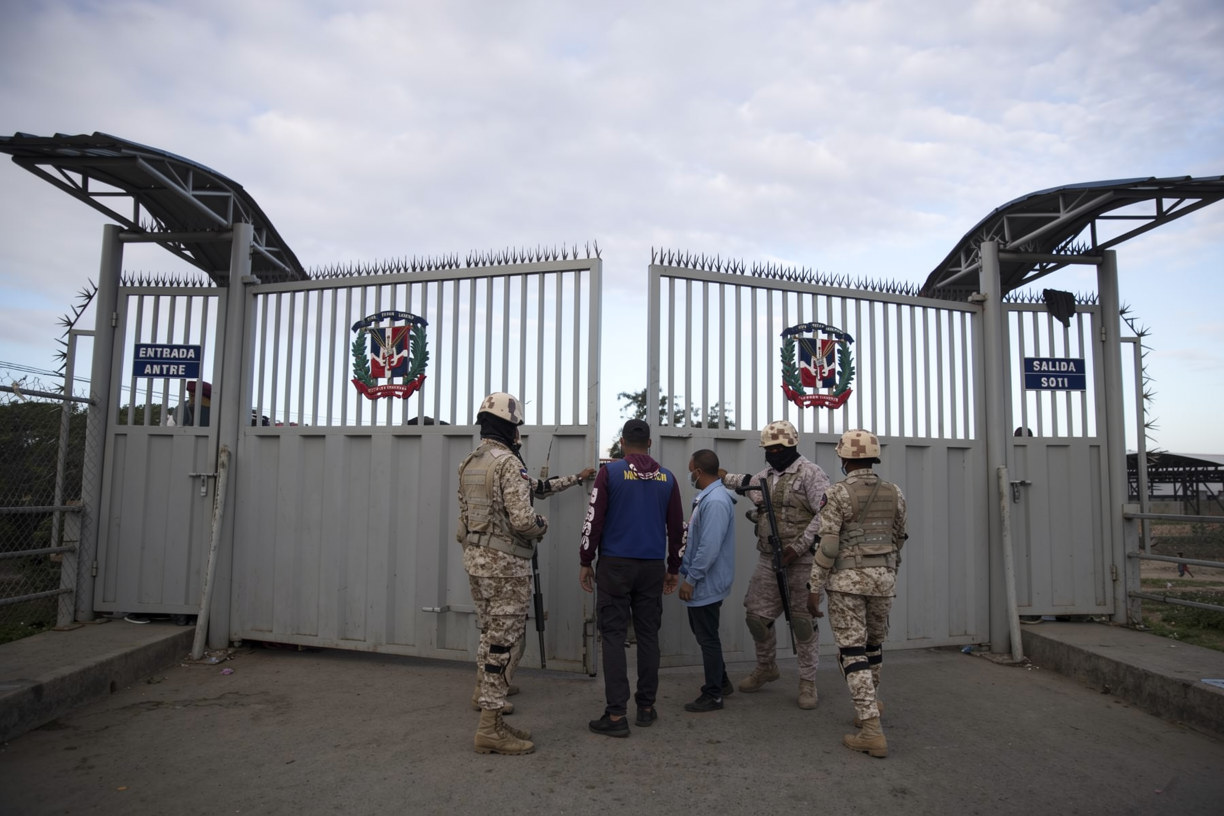
The Haitian-Dominican border is a political, legal, and territorial reality. It delineates two sovereign states. It involves rules related to migration, trade, security, territorial administration, and the movement of people. But the border does not transform a mother into another species of human. It does not alter a father’s pain. It does not change a child’s dreams. It does not strip dignity from someone holding a different passport. Haitians and Dominicans can have two states, two political systems, two national memories, and two historical trajectories while sharing the same human condition. This obvious fact does not negate disputes. It simply imposes a different way of managing them.
5. We need a third voice: that of knowledge
Between the discourses that shout and those that respond with other shouts, we must build a different intellectual space. Historians capable of explaining without simplifying. Journalists capable of contextualizing before disseminating. Academics able to verify facts before turning an emotion into truth. Teachers capable of teaching young people to distinguish memory, history, opinion, and evidence. Public officials able to defend their state’s interests without turning the neighbor into a permanent enemy. Citizens capable of saying: "I am deeply Haitian without needing to despise Dominicans." And: "I am deeply Dominican without needing to hate Haitians." This ability to love one’s country without dehumanizing the other could be regarded as a form of adult patriotism.
6. The border should become a space of responsibility
Haiti and the Dominican Republic cannot change their geography. They must therefore learn to rationally manage the shared realities. Environment. Migrations. Commerce. Public health. Security. Natural disasters. Natural resources. Economic development. University cooperation. These areas do not imply that the two states have the same interests. They imply that they have intersecting interests. Therefore, cooperation does not mean erasing sovereignties. On the contrary, sustainable cooperation assumes states capable of defending their interests while seeking solutions compatible with coexistence. One's sovereignty does not require the humiliation of the other.
7. Education against dehumanization
The sustainable response to aggressive nationalism cannot be purely political. It must also be educational. The school systems of both countries should enable new generations to better understand the history of the other society. This is not about fabricating an artificial common history. It is about learning to know each other’s history, including its contradictions, sufferings, responsibilities, and achievements. True citizenship education should teach young people to ask several questions before sharing an assertion: What is the source? What is the context? Is the fact established? Is it an opinion or a fact? Is the experience described individual or generalizable? Who benefits from disseminating this narrative? In the age of social media, this ability constitutes true information and institutional literacy. It also becomes a component of cognitive sovereignty.
8. In the age of AI, critical thinking becomes a strategic necessity
A video created or manipulated by artificial intelligence can now appear to be an authentic statement. A photograph can be entirely fabricated. A quote can be invented. An event can be presented without context. False information can be reproduced thousands of times even before a serious verification is conducted. In societies marked by sensitive historical memories, this technological transformation can amplify tensions. The question thus becomes: How can we prevent artificial intelligence from becoming a machine to industrialize prejudice? The answer lies in media education, digital verification, scientific culture, and the ability to distinguish between signal, information, evidence, and demonstration. A society that does not know how to verify what it sees becomes particularly vulnerable to those who know how to manipulate what it sees.
9. Our true fight is not against a people
The real fight should not be between Haitians and Dominicans. It should be between: knowledge and ignorance; verification and misinformation; empathy and dehumanization; dialogue and the reflex of confrontation; memory and the manipulation of memory; patriotism and hatred of the neighbor. This also requires distinguishing: disagreement from hatred; national interest from hostility; critique from contempt; memory from vengeance; sovereignty from closure; identity from the rejection of the other. This distinction is fundamental for building a more mature bilateral relationship.
10. A generation must learn another way to be patriotic
We must now envision a generation capable of knowing the history of both peoples, understanding their wounds, recognizing their responsibilities, and thinking about their future without being condemned to reproduce their antagonisms. A generation capable of saying: "I do not need to hate your people to love my own." This sentence seems simple. Yet it contains a true philosophy of coexistence. It means that identity is not necessarily constructed against the other. It means that sovereignty can coexist with cooperation. It means that memory can coexist with forgiveness. It means that knowledge can gradually replace prejudice.
Ultimately, Haiti does not need to become less Haitian to live in peace with the Dominican Republic. The Dominican Republic does not need to become less Dominican to live in peace with Haiti. Both societies must simply understand that a sufficiently secure national identity does not need to manufacture a permanent enemy to feel its existence. Between two exacerbated nationalisms, a third voice must therefore emerge. The voice of knowledge. The voice of reason. The voice of empathy. The voice of human dignity. Our true victory will not be to determine which people succeeded in humiliating the other. It will be to build two societies capable of defending their interests, preserving their memory and sovereignty while recognizing the humanity of the other. The day when a Haitian can look at a Dominican and see first and foremost a human being. And when a Dominican can look at a Haitian and see exactly the same thing. Two peoples. Two states. One humanity. It is this humanity that we must now learn to defend.
Me Jonel Dilhomme, Av.
Researcher in international law and global governance
Analyst of prospective applied to fragile states and the future of Haiti
Researcher on the General Theory of cognitive sovereignty applied to fragile states
Former professor at the State University of Haiti
Selective references
FUMAGALLI, Maria Cristina, On the Edge: Writing the Border between Haiti and the Dominican Republic, Liverpool, Liverpool University Press, 2015.
MATIBAG, Eugenio, Haitian-Dominican Counterpoint: Nation, State, and Race on Hispaniola, New York, Palgrave Macmillan, 2003.
MAYES, April J. and JAYARAM, Kiran C. (eds.), Transnational Hispaniola: New Directions in Haitian and Dominican Studies, Gainesville, University Press of Florida, 2018.
NESSLER, Graham T., Islandwide Struggle for Freedom: Revolution, Emancipation, and Reenslavement in Hispaniola, 1789–1809, Chapel Hill, University of North Carolina Press, 2016.
SAN MIGUEL, Pedro L., The Imagined Island: History, Identity, and Utopia in Hispaniola, Chapel Hill, University of North Carolina Press, 2005.
SAGÁS, Ernesto, Race and Politics in the Dominican Republic, Gainesville, University Press of Florida, 2000.
YINGLING, Charlton W., Siblings of Soil: Dominicans and Haitians in the Age of Revolutions, Austin, University of Texas Press, 2022.
INTER-AMERICAN COMMISSION ON HUMAN RIGHTS (IACHR), Report on the Situation of Human Rights in the Dominican Republic, Washington, D.C., Organization of American States, 1999, particularly the section on Haitian migrant workers and their families.
INTER-AMERICAN COMMISSION ON HUMAN RIGHTS (IACHR), Denationalization and Statelessness in the Dominican Republic, Washington, D.C., Organization of American States, 2016.
