

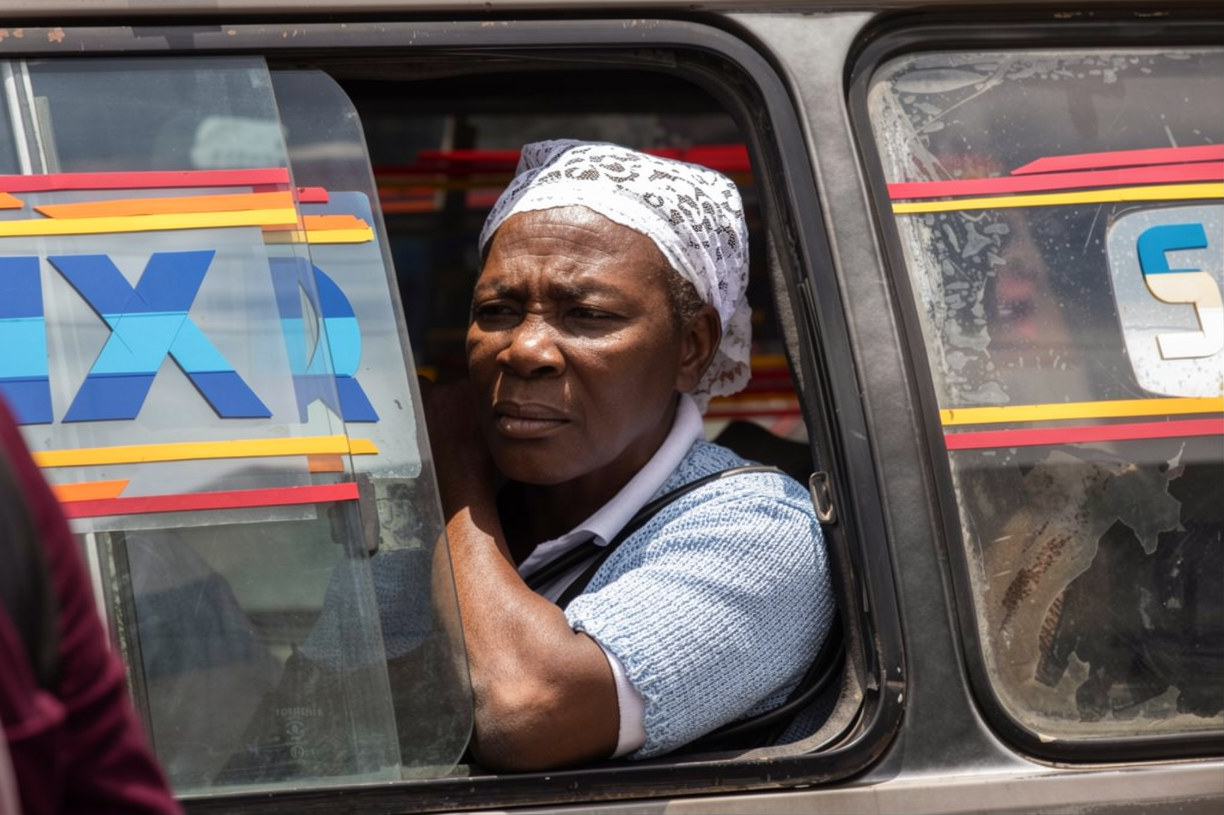
The current suffering in Haiti is no longer a fleeting sentiment. It is a systematic denial of life. From Kenscoff to Mirebalais, from Gressier to Delmas, an analysis of a trial that disrupts both individual and social bodies.
Extreme vulnerability: life in its aberration
The Haitian tragedy is bewildering. The level of suffering is such that individuals no longer know where it hurts. Those who hear, witness, or endure violence experience extreme vulnerability in their bodies, minds, and spiritual universes.
This experience is unbearable. It attacks life at its root. Everyone experiences upheavals of reference points in their daily lives, resulting in the destruction of inner peace and social peace. Thus, we have before us the spectacle of life in its aberration.
This suffering, which has progressively settled in over several years, is truly an unthought. That is to say, it is a problem for thought itself that traverses each person's existence. It affects us at the deepest level of our dignity. The horror of massacres confronts thought with the unjustifiable, with that which reason cannot grasp. The murder of a loved one or the abduction of a schoolgirl leads to helplessness, a suspension of the capacity to act, even to console others. This becomes a mental incapacity, a deep injury to dignity.
And yet we cannot allow ourselves to be destroyed by the alarming nature of present life, nor allow practical reason to be disqualified. As Albert Camus said in The Rebel, "one must not rob the relentless grandeur of this life." We must reach each person on the ground, where they seek to understand and to orient themselves. We cannot accept with resignation the miseries and injustices present. On the contrary, we must revolt, that is to say, refuse the situation as it is. For Albert Camus, revolt is the act of heroism of the human who refuses to abandon in the face of adversity.
Co-rumination: the trap of social scar
How to qualify this suffering? Following Paul Ricoeur, I define it as ethical suffering: an affect open to reflexivity, language, the relationship to oneself and to others. The affect is to be understood as an emotional, physical, and mental state. A feeling, a sense of what it does to individual and collective existence. This suffering therefore involves both bodily states and also situations, emotions.
The Haitian suffering arises from various situations where damages lead to physical injuries on personal and social bodies. It also leads to psychic and spiritual injuries. When discussing with any Haitian, the observation is striking: one cannot align two sentences without referring to this social scar. We unconsciously focus on this long-term tragedy, on its consequences and associated emotions, without ever reaching a vision capable of brushing against a solution.
It is a mental rumination that, when shared, becomes relational rumination. People feed each other the negative subject, despite themselves, and remain stuck on it. In psychology, this is referred to as co-rumination. It also affects the mind in the sense that this cycle of repetitive thoughts is directed towards problems perceived as insurmountable. We know that these recurrent thoughts, when they invade emotions, can lead to depression. We must be particularly attentive to these aspects when the moment for solid support comes.
The unthinkable: when thought fails
This suffering leads to an identity rupture. The sense of identity is adrift. When I discuss with people, I perceive a low self-esteem that can become pathological. It thus affects the relationship to one's own identity as well as the conditions of their relationships with their social environment. It leads to questioning the justification of the evil one suffers through the suffering itself, as well as through the situations that cause this suffering. Speaking about the massacre in Kenscoff automatically generates suffering, even without being directly affected.
This suffering is existential because it touches all dimensions of being human. It is a rupture of our trajectory, an injury to the present and the future. To suffer like this is always unacceptable, especially when it involves an anthropological fault of this magnitude.
It is fundamental to identify the perpetrators of this scourge, as the absence of justification amplifies the evil. The suffering caused by the Haitian situation is particularly unbearable because life, in areas controlled by bandits, seems subjected to their whims. This situation challenges our thought. As Blanchot emphasizes in The Writing of Disaster, these massacres are unthinkable; it is a reversal, a disaster for thought. Thought cannot represent them.
The destabilization of reference points generates in everyone a singular form of anxiety and social shame in light of the seemingly irreversible decline. The feeling of hopelessness that a child, a parent, a friend, a collaborator, a neighbor experiences leads to dramatic situations of precariousness and even renunciations of life.
How to preserve a healthy relationship with life in the face of a cumulative toll of massacres, rapes, and kidnappings? How to live well when collectively we have lost the capacity to protect?
Rebuilding society: from an ethical posture to active pedagogy
Beyond the observation of a daily life hindered by fear — fear of being killed, fear of losing everything, fear of moving about — we must intervene at the root of evil.
I proposed in the Ethical Reflection Space of Haiti (EREH) the article titled "Taking the Ethical Path." This path emerges where the being of Man is tested. It opens a way to full life by orienting towards actions, words, and relationships of trust. Thus we will prepare the society of tomorrow by grasping today's reality!
To escape this smothering, everyone must care about the meaning of their life. We live in a situation where the sense is no longer predetermined. What gives meaning are the gestures, the exchanged words, the attitudes, the things done together, the future projects. In short, everything through which feelings and emotions take shape. It is clear that meaning is not primarily an order of intellectual knowledge, but belongs to lived experience. That is, for example, of authentic solidarity in which one experiences being loved and loving. It is indeed the relationship to the other, to the neighbor, that is the place of meaning.
We cannot therefore allow ourselves to be struck by the denial of life. We must rebuild society. Rebuilding society means reshaping the Haitian and recovering the clarity of our visions. The strength of a nation is expressed through its discipline, its rigor, and its will to respect common rules. A society is above all a discipline: ethical, social, ecological, political, economic, scientific...
That is why we need to bring back air, meaning, reflection, and imagination into this country. For example, by creating significant moments of debate on the meaning of political engagement, on the meaning of life in society.
Do we not observe a wide gap between where the population wishes to orient itself and where the leaders are leading them? This tension creates a situation of distrust and a series of crises.
Some advocate for conversion as a way out: changing mindsets, changing behaviors, raising awareness... it is important but not sufficient. I also advocate for transformation through active education: making the individual an actor. One learns by doing, through practical experience. It is thus that we will build in co-responsibility a shared vision of the future.
We are at a turning point, a point of no return. Our society has changed and will never be the same again. This break is irrecoverable. We will have to invent something else. Those who have a poor understanding and a poor memory will repeat the same mistakes.
The challenge is unprecedented in scale. It is therefore fundamental to invent new norms of life by, of course, taking lessons from how we arrived here. I call collective attention to the urgency and necessity to hope and to act. The primacy of the social body as a force that imposes itself may be a first way out.
Notes
In her excellent article "Ethical Suffering and Tragic Suffering: The Levinasian Elaboration of the Nietzschean Critique of Compassion" from which I draw here, Aïcha Liviana Messina questions the sufferings caused by the Second World War as a problem for thought itself: that which reason cannot grasp.
See: Paul Ricoeur, Suffering is not Pain, in Claire Marin (ed.), Suffering and Pain Around Ricoeur, Paris, PUF, 2013, pages 13 to 34.
The notion of co-rumination or social rumination was first developed and proposed in 2002 by American psychologist Amanda J. Rose in her study titled "Co-Rumination in the Friendships of Girls and Boys." Child Development, 73 (6), 1830-1843.
Maurice Blanchot, The Writing of Disaster, Paris, Gallimard, 1980.
See: Steevenson Montinard, "Taking the Ethical Path (Voice)," www.espace-éthique-haïti.org
Yves Burdelot, Becoming Human: the Christian Proposal Today, Paris, Cerf, 2002, pages 52-53.
See: "Taking the Ethical Path (Voice)," op.cit.
