

An former Haitian minister or director general, now a candidate, can he invoke the theory of impossible formalities to escape the obligation of discharge? The question that serves as a pretext for this article is timely. In 2020, the late bâtonnier Monferrier Dorval popularized the theory of impossible formalities, in support of his colleague Jacky Lumarque from the University of Quisqueya, to suggest an exemption from this legal requirement in favor of the interested party and others in a similar situation. Presenting himself as a legalist in general, it seemed to escape Dorval that he was taking a pragmatic path, thus distant from legalism. On the other side was the voice of Sonet Saint-Louis, contesting this position, rightly reminding his colleague Dorval that this theory is of an administrative nature. Is the update of this theory today legitimate? What uses can be made of it? But above all, what lessons must we draw from what is happening to us?
The theory of impossible formalities is a jurisprudential construction of French administrative law that exempts the administration from fulfilling a formal obligation when its execution proves materially or legally impossible. It thus allows to avoid annulment for procedural defects of an administrative decision taken in a context of blockage independent of the will of the public authority. We will make a brief consideration of its foundations, its essence, its conditions of application, its limits, and then see if the citizen can benefit from it.
On the foundations of the theory
This theory is based on the need to reconcile the principle of legality with the practical requirements of administrative action. It originates from the Latin maxim Ad impossibilia nemo tenetur (to the impossible, no one is bound), transposed to public law to adapt the rigor of texts to the realities on the ground. The administration must not be paralyzed in its mission of general interest by insurmountable procedural obstacles, in the name of the principle of continuity of public service. The French Council of State forged this pragmatic mechanism to prevent excessive formalism from leading to the censorship of regular acts on the merits, notably through recent case law on the absence of irregularity of impossible formalities to fulfill. Thus, it is the administrative judge who decides.
On the essence and conditions of its application
For the judge to admit the application of this theory, the impossibility must have specific and objective characteristics. Three elements should be noted: (1) the obstacle may result from the physical disappearance of a file, the absence of legal existence of a consultative body not yet constituted, or the vacancy of a position necessary for the procedure. (2) the theory often applies when the formality fails due to the manifest bad faith of a stakeholder. This is the case when an agent refuses to collect his registered mail or when members of a parity commission deliberately refuse to sit to block a decision, (3) the impossibility must in no case result from a fault, negligence, or delay attributable to the administration itself.
On limits and strict regulation
Because it constitutes a deviation from the principle of external legality, the theory of impossible formalities is strictly framed by doctrine and case law, as highlighted by Sébastien Saunier's analysis on the contours of this notion. There are a few considerations to make on this subject: (1) The administration must prove that it has done everything to try to fulfill the formality before giving up (for example, by repeatedly summoning a failing consultative body). This is the requirement for prior diligence. (2) It cannot be invoked if a substitute procedure or an equivalent formality was legally feasible to guarantee the rights of the citizens. This is the subsidiary nature. (3) The administrative judge verifies in concreto the reality of the obstacle. If the administration itself has created the blockage situation by delaying the establishment of a consultative body, the act will be annulled for procedural defect.
Can the citizen invoke this theory against the administration itself?
A citizen cannot invoke the theory of impossible formalities in such a situation, for three fundamental legal reasons. This theory exclusively protects the administration against external obstacles, and the impossibility can never be invoked by the one who is its origin.
This theory is reserved for administrative action. The theory of impossible formalities is a tool created by the administrative judge to avoid paralyzing public action. It serves to excuse the administration when it cannot comply with a procedural rule before making a decision. A mere individual or citizen cannot use it to exempt themselves from a legal obligation that personally falls on them. However, the citizen confronted with an insurmountable obstacle preventing compliance with the law is entitled to invoke the notion of force majeure (an external, unpredictable, and irresistible event).
In other words, the impossibility created by the interested party themselves (lack of externality) annihilates all hope of benefiting from it. The central condition of the impossible formality — as for force majeure — is that the obstacle must be totally independent of the will of the one who invokes it. In law, no one may take advantage of their own wrongdoing or a situation they have themselves caused (Nemo auditur). Consequently, the individual who has actively worked to create the impossibility or force majeure, such as the dissolution of Parliament, is considered to be the origin of the obstacle. The judge will necessarily reject the argument of impossibility because the condition of externality is lacking.
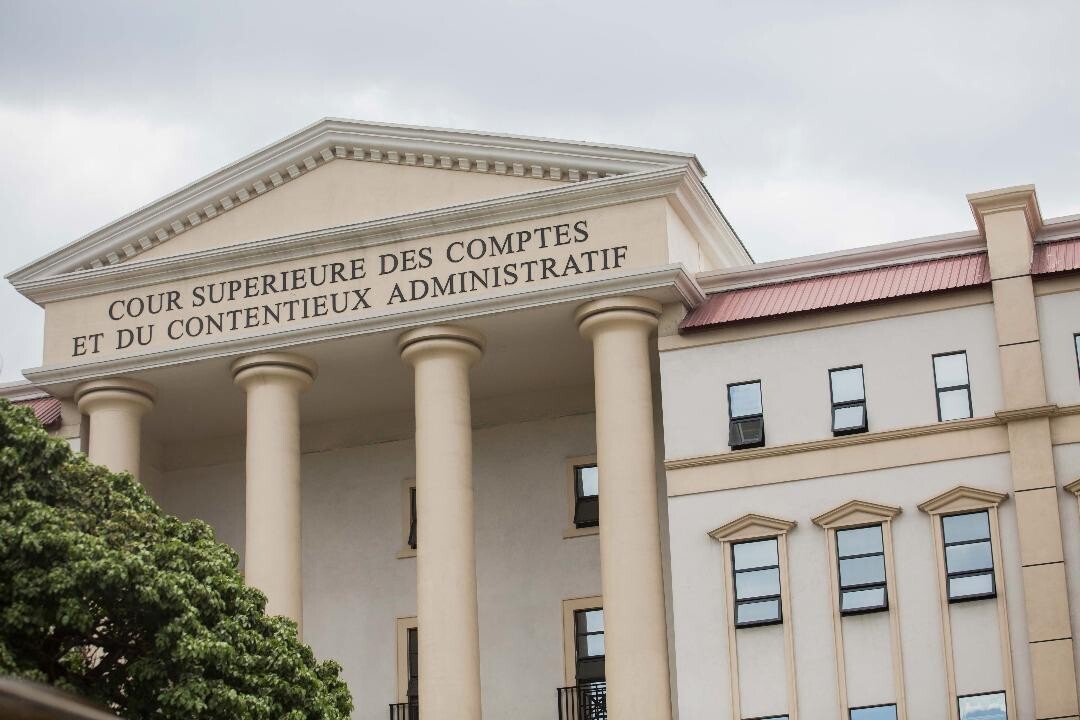
Moreover, in constitutional and financial law, the dissolution of a Parliament never creates an absolute legal void allowing escape from its legal or accounting obligations. The immediate and usual consequence of this void is the postponement of the formality. The temporary absence of a parliamentary assembly generally suspends or postpones the granting of a discharge (such as the clearance given to a public manager or a minister), but does not annul it. The formality must be fulfilled as soon as the new assembly is elected. Thus, the obligation of discharge remains enforceable. Nevertheless, in the name of the principle of continuity of institutions, current affairs are managed by the government in place, and control mechanisms (such as the Superior Court of Auditors and Administrative Disputes) continue to operate independently of the parliamentary calendar.
What to conclude?
We have a preparatory technical phase secured by an existing body, followed by a decision-making phase blocked by the vacancy of the competent body. Rigorous legal analysis in administrative law suggests the impossibility of invoking impossible formalities to dispense with the second step.
In public law, when a procedure successively requires a technical opinion (such as the Superior Court of Auditors and Administrative Disputes) and then a legal approval decision (such as the Parliament), the two acts have distinct natures.
The CSCCA has only the power of observation or recommendation. Its favorable report does not constitute legal clearance, as it does not have the legal competence to extinguish the responsibility of the manager. It cannot appropriate the clearance power of the absent institution, even in case of institutional blockage. Such a decision would be tainted by absolute incompetence.
Although, in the face of the absence of the institution responsible for delivering final clearance, the theory of impossible formalities fails, other mechanisms could apply depending on the manager's stance.
This theory allows an authority to make a decision by skipping a blocked consultation. Here, the situation is reversed: the consultation (step 1) took place, but it is the final decision-making authority (step 2) that is lacking. One cannot “skip” the final decision itself. However, when the manager has himself contributed to the disappearance or dissolution of the institution of step 2, the principle Nemo auditur (no one can take advantage of their own wrongdoing) prevents him from claiming an exemption from discharge or deriving a legal advantage from this institutional void. This thesis is defensible by opinion today when one recalls the actors who caused the crises that dissolved Parliament. Thus, as long as the institution of step 2 is not reconstituted, the procedure remains legally pending. The manager is not freed from their responsibility, but the completion of step 1 would only allow them to demonstrate their accounting good faith while awaiting the assembly's reunion.
This unfortunate situation is very instructive for both our political and legislative practices. For when such a two-stage architecture is blocked by a parliamentary dissolution or an institutional vacancy, certain legislations generally foresee three outcomes: a postponement, a legal substitution, or a liberating prescription. Therefore, excluding individuals blocked by this discharge requirement can prove to be an educational decision: one must not lack judgment to the point of legislating without foresight, and also that we must not engage in actions aimed at destroying our institutions. Regardless of our immediate interests.
