

In Saint-Louis-du-Nord, the city of my parents, the debate on TPS is not a new topic. It is the subject of evening calls, the transfers that sustain families, the projects we dare or no longer dare to undertake. When Washington talks about temporary protective status, we hear an administrative decision in Miami. In Haiti, we hear something different: will the son, daughter, or cousin who sends money every month be able to stay where they are, work legally, and continue to keep the family afloat?
The TPS for Haiti ended on July 27, 2026. In June, the U.S. Supreme Court decided, by six votes to three, in the case of Mullin v. Doe, that the courts cannot review the decision to end it. We can discuss this ruling, but its practical meaning is clear: the courthouse door is closed.
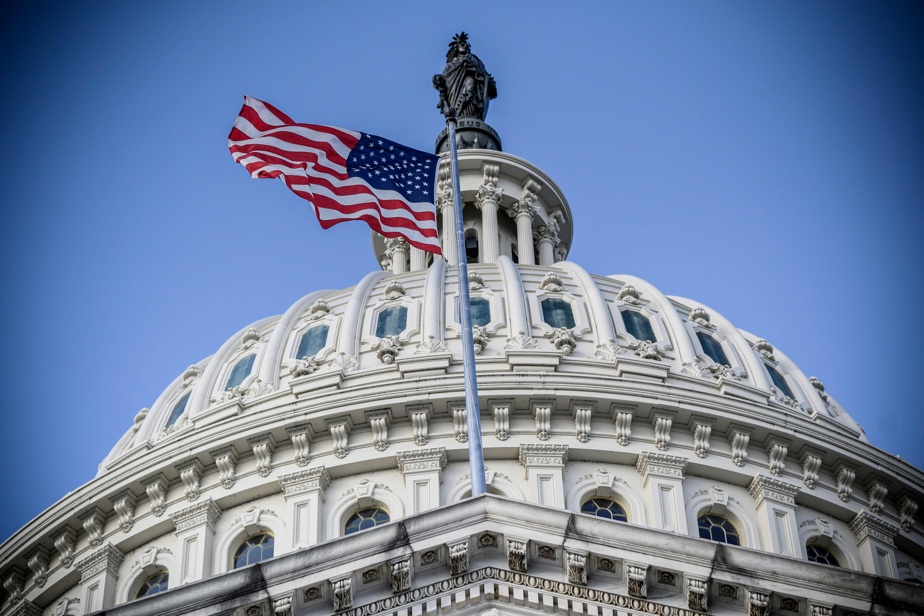
Only one door remains open, that of Congress, and its calendar is running out.
The House of Representatives did its part in April by passing H.R. 1689 to restore TPS for Haiti. The corresponding text in the Senate, S. 4814, has been waiting for months in the judiciary committee. The 119th Congress ends on January 3, 2027.
If the Senate does not act in the next six weeks, the text will die, and we will have to start over from scratch in a new Congress, while families continue to live without protection.
I am a fifth-grade teacher in a Catholic school in Miami. I see the other end of this waiting every morning in my classroom. I will not recount the story of any particular child, as these stories belong to my students. But I can describe what a countdown means at ten years old. It looks like a student who cannot focus on a math lesson because a rumor crossed the neighborhood the night before. It looks like empty seats on a Monday after a weekend when a deportation flight was reported. Deportation flights have been leaving weekly for Haiti since August, to a country where about 1.45 million people are displaced and gangs control most of the capital. Each flight is closely followed by families here, including those of my students. A ten-year-old child should worry about a spelling test. Mine do arithmetic that no child should have to do: counting the adults in their lives and wondering which ones will still be there for dinner.
On November 10, the U.S. Conference of Catholic Bishops wrote to each senator asking for the bill's adoption. This gesture deserves to be noted. The bishops were not speaking of an abstraction. The parishes and Catholic schools in this country, including mine, are filled with Haitian families who have followed all the rules set by the government. They have registered. They have paid the fees. They have renewed on time, time and again, some for over ten years. They have built their lives within the lines we drew for them.
A policy that punishes people for having obeyed teaches all the families watching that obedience is pointless. This is true in Miami. It is just as true from the perspective of Saint-Louis-du-Nord, where America is also judged by how it treats those who have held up their end of the bargain.
The diaspora is not just an audience for the Haitian crisis. It is a participant, through the remittances that feed families, through the children it raises between two countries, and through its voice in the one capital where this specific decision will be made. That is why the next six weeks are not a time of waiting but a time of work.
Call your senators. Both of them, and more than once. A senator's office counts calls on a living bill, and S. 4814 is a living bill until January 3. If you are a person of faith, organize through your church, as the bishops have just shown nationwide; a congregation that calls together is harder to dismiss than each of us calling alone. If you belong to a community group, a professional association, a parent-teacher organization, put this bill on your agenda while it can still happen. And talk to your neighbors who are not Haitian, because the principle at stake is theirs as well: a government that asks people to follow its rules must keep its word when they do.
The courts have spoken. The House has spoken. The bishops have spoken. The Senate has about six weeks to speak in turn, and then the bill will disappear. The children in my class cannot call the Senate. Their parents, who work two jobs and bear the weight of two countries, should not have to carry this alone. Those of us who can pick up the phone, in English, in Creole, in French, in the language our homes speak at the table, owe it to them before the clock stops.
Wrendly Mesidor is a fifth-grade teacher in Miami, president of the North Miami Beach Redevelopment Advisory Board, and the author of six books, including Carry the Legacy and Dear Young Leader (coming out on January 11, 2027). He is a graduate of Broward College and Florida International University.
