

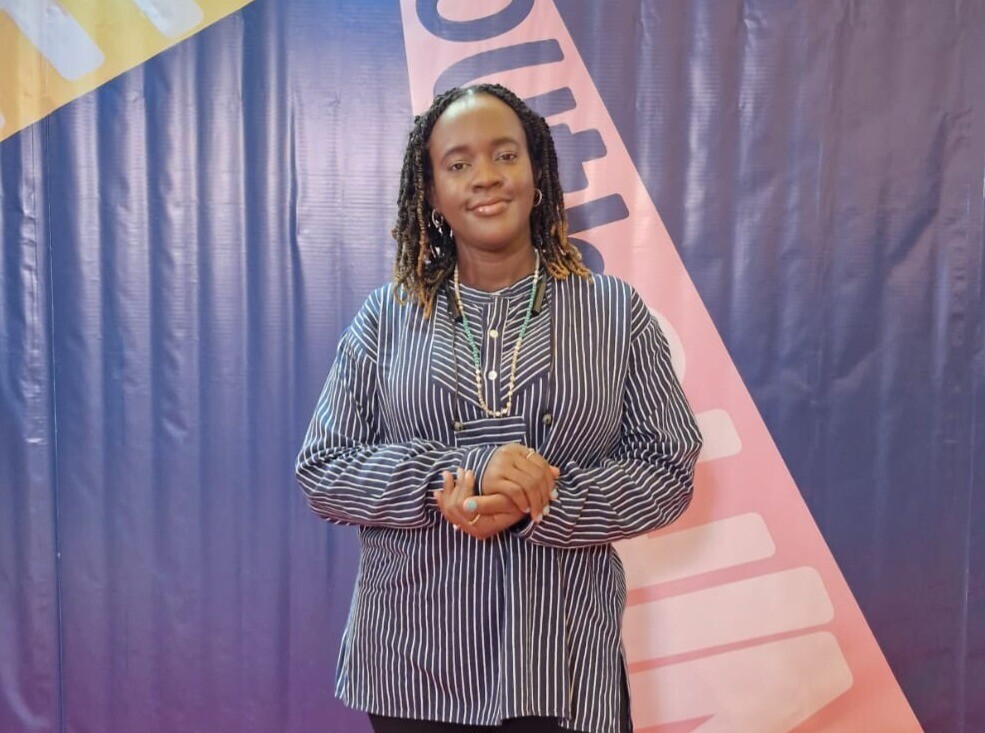
There are young people who deserve to be highlighted, not only because of their exemplary and concrete commitment, but also because our society needs to shine a spotlight on positive initiatives. At 26 years old, Marline Bilgaï Grand Jean is certainly one of those young people who deserves recognition, particularly for her close work with schools, associations, and community organizations.
Selected from 850 applications for the "Global Youth and Survivors Summit," Marline Bilgaï Grand Jean had the opportunity to participate in three international meetings organized in the Philippines from November 15 to 19, 2026. At the intersection of advocacy, strategic advice, and international development, this young Haitian professional has drawn on her experience in education, health, and project coordination in a context of insecurity to contribute to a debate that also touches on justice, human rights, and digital security.
Alongside other young people gathered in Manila, she contributed to discussions on preventing violence and access to assistance in situations where insecurity and forced displacement undermine essential services.
It's also a way to further encourage Haitian youth, in search of recognition and inspiring role models, by tracing the various activities Marline has participated in. Her involvement in these meetings has notably helped raise awareness of the Haitian experience among stakeholders from other countries and discuss certain initiatives that could improve living conditions within communities.
November 15 and 16 — The Global Youth and Survivors Summit
Co-organized by Restless Development, the Brave Movement, and the Global Youth-Led Movement on Ending Violence Against Children, the summit brought together youth and survivors to develop proposals for decision-makers.
Marline Grand Jean participated in workshops dedicated to prevention, access to services, and the participation of youth and survivors in decisions that affect them. On November 16, she also attended a parallel session on preventing online sexual abuse of children. This component allowed for greater integration of digital security into discussions on child protection.
November 17 — The Youth Innovation Marketplace
At the Youth Innovation Marketplace, she discovered initiatives presented by their young creators to combat corporal punishment, child labor, early and forced marriages, as well as online sexual exploitation.
She also participated in a dialogue on safety in and around schools, organized by the Safe to Learn coalition, UNICEF, and UNESCO.
These two events highlighted actions undertaken by young people, educational teams, and protective organizations at their level, while examining practices that could be adapted to other national realities.
November 18 and 19 — The Second Global Ministerial Conference on Ending Violence Against Children
Co-organized by the Government of the Philippines, WHO, and UNICEF, in collaboration with the Special Representative of the UN Secretary-General on Violence Against Children, this conference provided states with a framework to announce their commitments to child protection.
At the opening on November 18, representatives of youth and survivors presented the Action Accord: Ending Violence Against Children, their joint call to decision-makers. Leading up to the conference, WHO had announced over 230 new government commitments.
The call to action from Safe to Learn could serve as a starting point for Haitian institutions and civil society to define common priorities. Among these are school safety, access to care and psychosocial support for displaced children, as well as the involvement of youth in monitoring adopted measures.
For Haiti, the interest in such a commitment would be to translate these priorities into concrete actions, accompanied by clearly defined responsibilities, appropriate resources, and a timeline for implementation.
Dialogues with stakeholders from various sectors
Throughout the workshops, conferences, and exhibitions, Marline Grand Jean had the opportunity to engage with Sabrina Gahar, president of the African Committee of Experts on the Rights and Welfare of the Child, and Bryanna Mariñas, founder and executive director of Violence Ends With Us.
Among her interlocutors were also Dr. Étienne Krug, Director at WHO responsible for the determinants of health, promotion, and prevention, Dr. Najat Maalla M’jid, Special Representative of the UN Secretary-General on Violence Against Children, and Ted Chaiban, Deputy Director-General of UNICEF and UN Under-Secretary-General. She also exchanged ideas with Natalie Agboeze and Alex Kent from Restless Development.
These dialogues covered several areas, including child protection, human rights, cybersecurity, public health, and mental health.
Marline now intends to build on the contacts made in Manila to better showcase Haitian initiatives, connect their leaders with organizations working on similar issues, and explore collaboration opportunities for the benefit of schools, civil society, and communities, both in Haiti and in other countries facing violence and forced displacement.
A journey that connects grassroots action to decisions
Beyond her participation in these various international events, it should be noted that Marline Bilgaï Grand Jean's commitment originates in Carrefour, with the Salesians of Don Bosco, at Marie Régine de Thorland.
A former national president of VIDES, also engaged with the TOYA Foundation, she has also coordinated educational programs at Scholas Occurrentes.
At Zanmi Lasante, she works on health programs, partnerships, and resource mobilization. Her personal experience as a survivor also informs her advocacy for the effective participation of affected individuals in the development of responses meant for them.
Already looking to the future of her commitment, Marline aims to translate the discussions from Manila into projects adapted to the Haitian realities, particularly regarding school interruptions, difficulties in accessing services for displaced families, and the growing needs in mental health.
This ambition requires developing partnerships between schools, associations, and health services, as well as mobilizing resources to ensure the prevention and monitoring of actions taken.
For the children and families most exposed to violence and exclusion, it is primarily the actual access to these services that will measure the impact of these commitments.
Beyond Marline Bilgaï Grand Jean's individual journey, her international participation once again illustrates the capacity of a part of the Haitian youth to engage, innovate, and make their voices heard, despite the difficulties facing the country. This kind of reality, far more than the violence that dominates the news, also deserves to retain its place in the perspective we hold on Haiti.
