

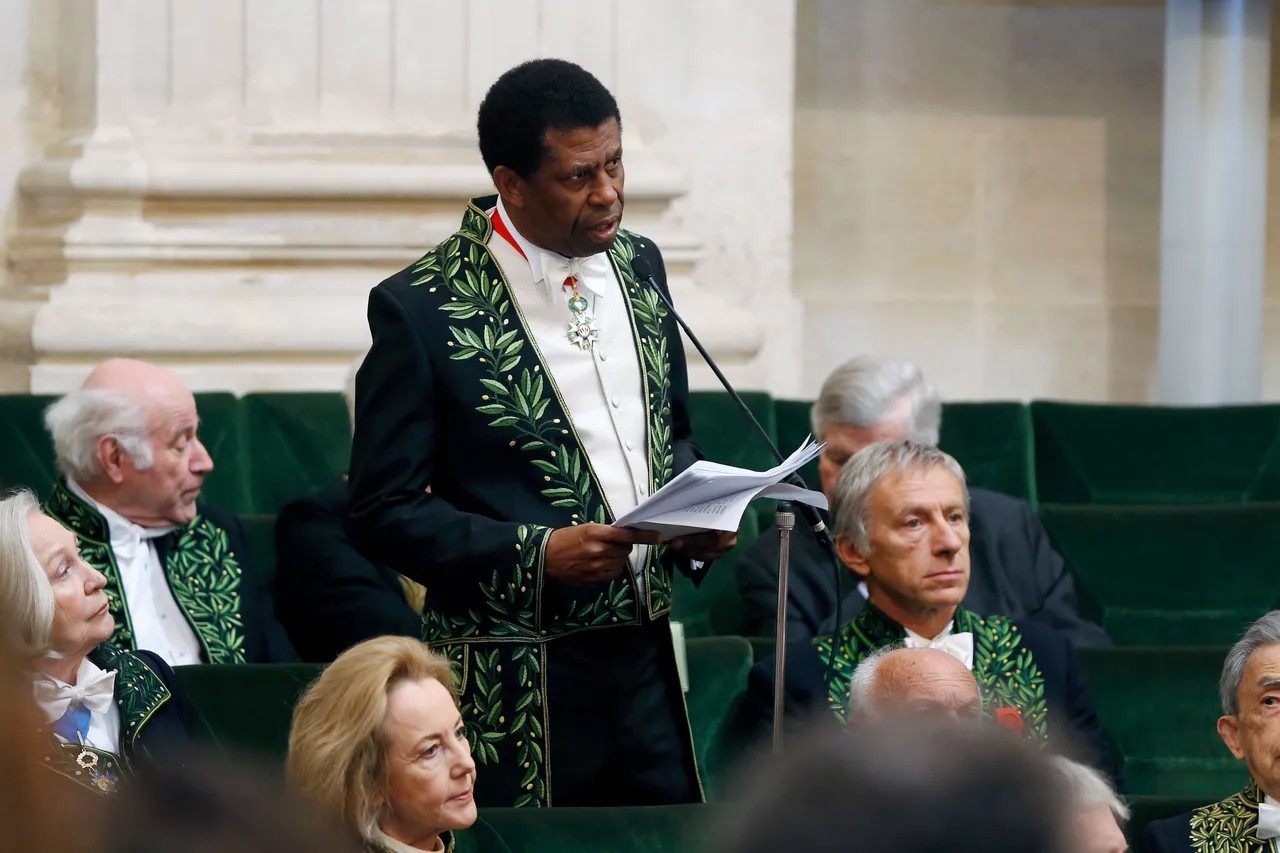
The history of peoples is played out and written not only on the battlefields but also in the cushioned halls of universal history books. On December 12, 2013, Dany Laferrière's election to the Académie française was not merely an individual literary crowning; it was a major political earthquake, a direct although belated response to the memory blockade imposed on Haiti since 1804.
More than two centuries after the indigenous army broke the chains of slavery at Vertières, a son of Petit-Goâve has come to jump the locks of the linguistic citadel of the former colonizer. This act of priceless value has not yet received the visibility, reach, and national dimension it deserves. It is time to decode the grammar of this victory and understand how, by sitting among the immortals, Dany Laferrière washed away the affront of silence and etched Vertières into universal history.
To punish Haiti for proclaiming its independence and becoming the world's first black Republic, colonial powers orchestrated an unprecedented historical falsification endeavor, choosing to erase Vertières from French dictionaries, school textbooks, and reference encyclopedias while flooding our schools with imported textbooks and forcing our children to memorize every detail of European history. They meticulously suppressed the day when slaves defeated Napoleon Bonaparte's elite troops.
Dany Laferrière's arrival at the Académie française confronts this more than two-century-old censorship. His enrollment was not made through supplication but through the strength of a masterful literary work that imposed Haitian genius on the entire world. By occupying chair number 2, formerly held by Montesquieu, the Petit-Goâvien achieved an act of historical self-defense. He forced the institutions of the former metropolis to face the reality of our epic. This path is now irreversible: universal history can no longer be written without mentioning the people who gave true substance to the concept of freedom.
The French language has long been used here as a tool of exclusion and domination, an instrument of power reserved for an elite to keep the people in the shadows. Dany reversed this colonial power dynamic by reminding us of a fundamental truth: the French language does not only belong to France; it also belongs to those who master it, reinvent it, and make it shine. According to the newly famous phrase: “A war booty.”
The official introduction of the word and the reality of Vertières into the dictionary of the Académie française and into universal history is an invaluable heritage restitution. By engraving this word at the heart of the language of the former master, Dany Laferrière has transformed a Haitian place of memory into a universal concept. This step taken definitively means that Haitian freedom no longer awaits external validation to exist; it has comfortably settled at the very center of global linguistic heritage. Dictionaries can no longer ignore it because a famous Haitian writer is now one of its official guardians.
The importance of this act lies in restoring our national pride. In the face of an educational system that sells us books disconnected from our reality and teaches us a bunch of concepts of lesser importance for the development and evolution of our society, this election is an invitation to awaken. It shows us that the freedom of a people is not negotiated; it is seized through talent, rigor, determination, and fidelity to one's roots.
Dany has never renounced Petit-Goâve, his aunts, the smell of his coffee, or the streets of Port-au-Prince to please the Parisian and Quebec elite. On the contrary, it is all of Haiti's cultural heritage, with its beliefs, its colors, its pains, its joys, and its fervor that he has brought under the dome of the Institut de France. He has washed away the shame of erasure by reminding the whole world that the Haitian people are not a people of victims to be pitied but a people of creators and historical giants to be respected.
