

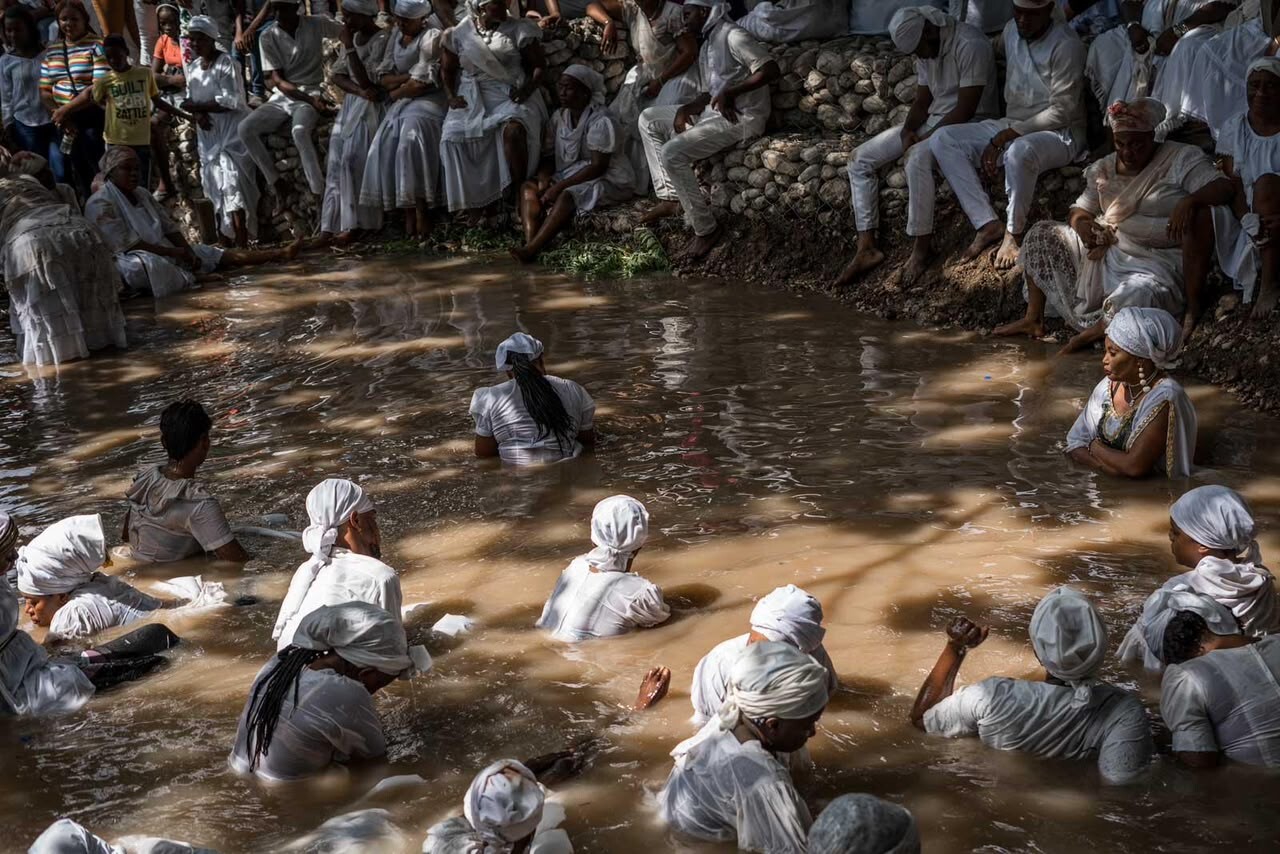
For some time now, we have been witnessing an increasingly prominent presence of houngans and manbos on social media. Facebook, TikTok, and YouTube are becoming new spaces for expression, transmission, and visibility for actors long marginalized or caricatured in certain public discourses.<\/i><\/p>
This evolution deserves our attention. Beyond ceremonies, prayers, and spiritual practices, several houngans and manbos contribute to raising awareness of an important dimension of our cultural heritage. They share knowledge, explain certain rituals, transmit teachings, and participate in preserving a legacy that is part of Haitian identity.<\/p>
This digital presence can help deconstruct prejudices, combat misinformation, and restore a place for traditions that are too often silenced.<\/p>
However, one phenomenon merits particular attention: the multiplication of daily posts about borlette balls, recipes for freeing baths, baths for luck, and rituals meant to attract money, love, or success. While some of these practices belong to popular traditions and beliefs, their massive dissemination raises questions. Is it about transmitting spiritual knowledge or retaining an audience by nurturing hope for gains, miracles, and quick changes in people's lives?<\/p>
The situation becomes concerning when individuals facing financial, emotional, or personal difficulties are exposed to promises that may exploit their vulnerability. Spirituality should not become a mere product aimed at generating views, subscribers, or revenue. Knowledge, ethics, and respect for beliefs must remain at the core of this commitment.<\/p>
It therefore becomes necessary to consider establishing a regulatory body capable of framing these new digital practices. Composed notably of qualified representatives from the Vodou sector, lawyers, heritage specialists, and digital experts, it could help establish an ethical framework, prevent abuses, and protect the public.<\/p>
This is not about censoring Vodou, restricting freedom of worship, or preventing the transmission of traditions. It is about holding accountable those who use their spiritual influence to communicate with thousands of people. Freedom of expression should not become a pretext for manipulation or exploitation of believers' trust.<\/p>
It would be unfair to condemn this presence on social media. But it would be equally naive to assume that anyone presenting themselves as a houngan or manbo online is necessarily carrying authentic knowledge.<\/p>
The real issue is not whether Vodou should conquer social media, but what contribution its representatives wish to make to Haitian society through these new spaces.<\/p>
Our spiritual and cultural heritage deserves better than prejudices, but also better than spectacle.<\/p>
Visibility is an opportunity. Knowledge is a responsibility. And transmission is a legacy.<\/p>
