

Introduction
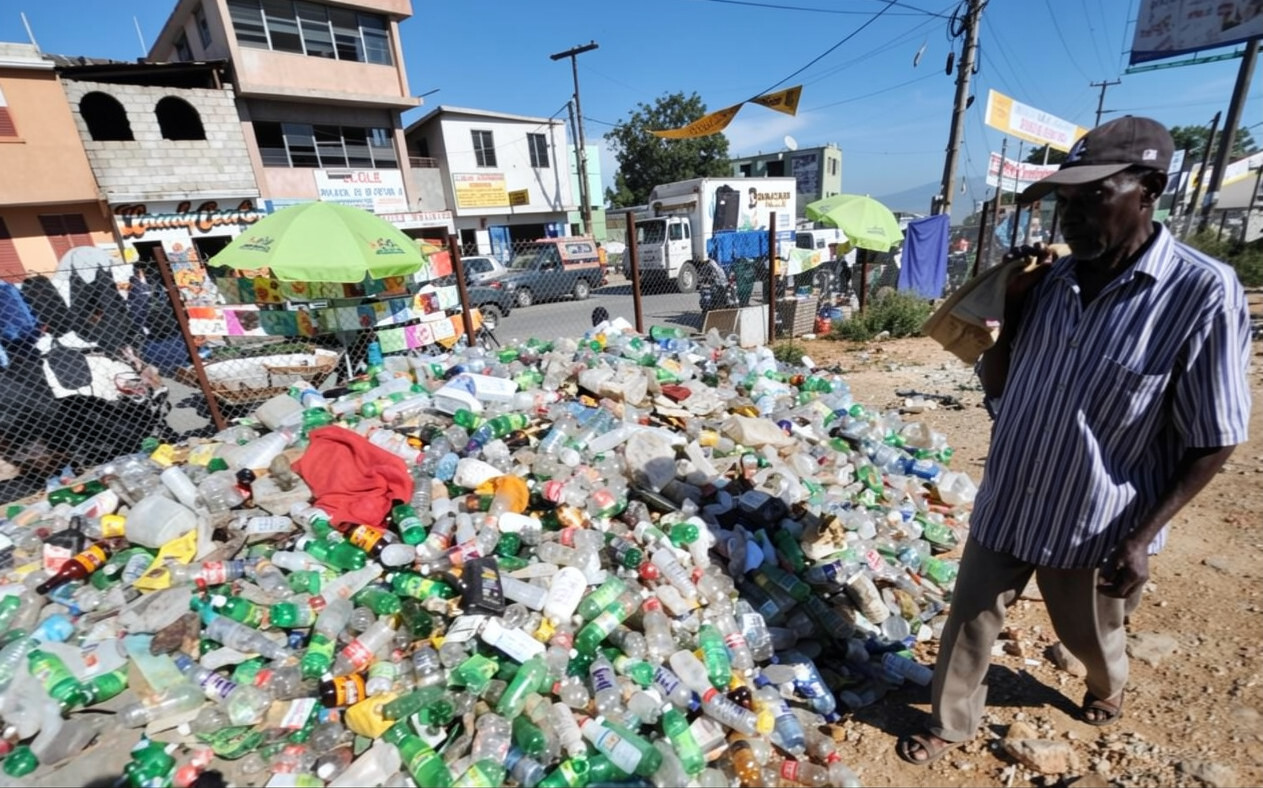
In Haiti, the issue of plastic waste is no longer just a cleanliness problem. The accumulation of plastic waste in the streets, canals, and coastal areas of the country poses a major health and environmental challenge. In light of this situation, the valorization of plastic waste constitutes a solution to limit pollution. But another question deserves to be asked: what can we do with plastic once it has become waste?
This question invites us to move beyond the perception of plastic as a source of pollution. Depending on its nature and the possibilities for transformation, plastic waste can present an interest as secondary raw material. However, this potential value only becomes real if we are capable of recognizing the material, collecting it under proper conditions, and finding a suitable use for it.
The chemistry of polymers can provide part of the answer. Not all plastics behave the same way. Understanding their composition, structure, and properties allows for the selection of sorting and valorization methods. It is in this perspective that I wish to share a research experience conducted in France, while reflecting on its possible applications for Haiti.
The Challenge of Complex Packaging: Effective Protection, a Puzzle for Recycling
As part of my Master's degree work conducted at the Polymers, Biopolymers and Surfaces (PBS) laboratory on the valorization of multilayer plastic films, specifically the combination of two incompatible polymers: linear low-density polyethylene (LLDPE) and polyamide 6 (PA6). These materials illustrate well the complexity of certain materials: the polymers that compose them bring complementary properties. LLDPE contributes to flexibility, mechanical strength, and has good barrier properties against water vapor. PA6 has good barrier properties against certain gases, especially oxygen. The combination of these two polymers meets specific needs in the packaging field.
To improve the adhesion between these two polymers during the implementation of this multilayer film, a compatibilizing agent, such as polyethylene grafted with maleic anhydride (PE-g-MAH), can be used. This example presents a significant difficulty during the valorization process: when several incompatible polymers are combined and then reprocessed, they generally do not form a homogeneous material. The different phases may exhibit poor compatibility, which can affect the properties of the final material. Furthermore, the presence of impurities or additives in the plastic can further complicate the transformation.
Recycling a plastic, therefore, is not simply about melting it down. One must first know what the plastic waste contains, sort it, and choose an appropriate valorization method. Knowing the material already means better understanding its values.
Valorization: Turning a Technical Obstacle into an Economic Opportunity
A technical difficulty does not necessarily mean that a waste has no value. In certain mixtures of polymers, compatibilization can enhance interactions between the different types of polymers and contribute to obtaining a valorized material with properties better suited to specific uses.
After characterization, the recycled plastic must be directed towards applications compatible with its properties. Depending on the results obtained, it can be used for the manufacturing of materials resulting from downcycling, recycling, or upcycling. The feasibility of these various applications must be verified through appropriate trials. The goal is not only to transform the plastic waste but also to obtain a raw material with added value suited for a specific use.
This approach also allows for considering plastic waste as an economic resource. The less contaminated they are, the more value they possess. Their valorization helps create activities, provided that the solutions are technically feasible and economically viable.
The value of recycled plastic relies on several stages: collection, sorting, raw material preparation, transformation, and marketing of the final product. When one of these steps incurs significant costs, the sustainability and profitability of the valorization process can be compromised. Conversely, a good understanding of the characteristics of plastic and market requirements allows for directing efforts toward more advantageous solutions.
What Are the Prospects for Haiti?
Haiti cannot directly adopt the industrial models developed in Europe or America, as conditions differ, particularly in terms of waste collection, access to energy, industrial capacities, and commercial outlets. It is essential to develop solutions suited to the technical and economic realities of the country.
It is important to recognize the plastic waste valorization initiatives already implemented in Haiti. This implies analyzing existing practices, the difficulties encountered by stakeholders, and opportunities for improvement. Therefore, any reflection aimed at developing new strategies must take into account the real conditions on the ground and leverage the work done in Haiti as well as in other countries.
The first step would be to better characterize the plastic waste present in the territory: which polymers are most common? In what quantities? With what level of contamination? Universities could play an important role in this scientific knowledge.
The second step concerns collection and sorting. Individuals who already recover waste should be considered one of the actors in the valorization chain. Well-organized working conditions, training, and fair compensation could strengthen their role.
Finally, rather than starting with large factories, small or medium-sized units could allow for testing different valorization pathways: chemical or mechanical in order to produce new materials suited for the local market. These projects could bring together universities, businesses, the diaspora, and young professionals trained in Haiti and abroad.
Conclusion
The issue of plastic waste in Haiti will not be resolved by a single solution. It requires prevention and awareness actions, better organization, research efforts, and the creation of economic outlets. The chemistry of polymers alone cannot solve the problem of plastic waste. It serves as a fundamental tool for better understanding materials and identifying the most appropriate valorization possibilities for plastic waste.
This knowledge represents a line of thought that deserves further exploration. It can help strengthen existing initiatives and give rise to new opportunities for value creation. However, these solutions must be assessed in light of the environmental, technical, and economic realities of the Haitian context.
Preventing pollution and reducing plastic waste remain priorities. It is also important to better understand the materials we use every day. Indeed, some plastic waste can become real resources, and their valorization relies on our ability to understand and implement appropriate transformation processes.
The question is therefore not only how we will dispose of our plastic waste. But also how to reintegrate them into a value creation cycle.
Doridrolson LOUIS
Master's student in Polymer, Biomaterial and Eco-material
