

The Displaced Students of UPC: Between Violence, Right to Education, and Resilience
Summary. The invasion of Mirebalais by armed groups, reported to have occurred on March 31, 2025, has disrupted the paths of students from the Université publique du Centre (UPC), a member of the network of Public Universities in the region (UPR). Testimonies from fourth-year administrative science students describe the departure from Mirebalais to Hinche, living in unsanitary university halls, precarious study conditions, and a sense of being disregarded. This article reads these experiences through the lens of the sociology of violence and exclusion, trauma and resilience psychology, the philosophy of dignity, as well as norms related to internal displacement and the right to education. It argues that equity requires appropriate and temporary support measures, and that the perseverance of these students deserves recognition without turning their suffering into a heroic obligation.
A Biographical and Institutional Break
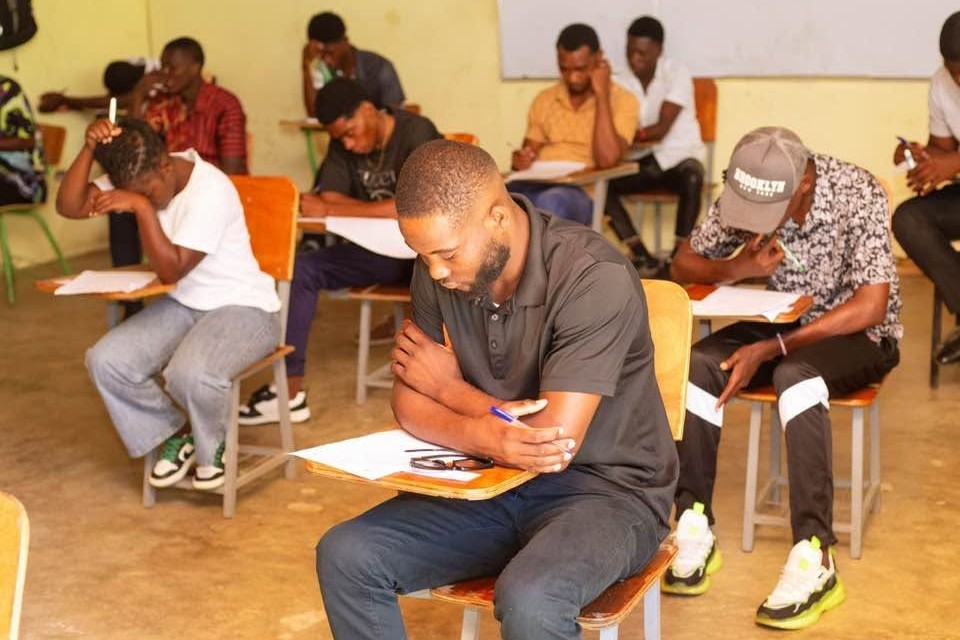
Leaving one's place of study under threat is not a simple campus change. For the affected students, the move from Mirebalais to Hinche interrupted habits, social ties, and material references that made academic work possible. The university, which should provide a relatively stable space for knowledge and sociability, found itself caught in urgency: study rooms also served as housing, and the reported conditions—unsanitary, lack of privacy, and precariousness—made pedagogical continuity more costly.
The information available here comes from testimonies reported by the students and does not constitute an independent investigation into each individual situation. This precaution does not weaken their significance: it invites us to treat them as situated narratives, to document, listen to, and confront with institutional responses. The student voice allows us to make visible dimensions that enrollment figures or classroom attendance alone cannot capture.
Social Violence Beyond the Attack
The sociology of Pierre Bourdieu helps to understand why a crisis does not affect all students in the same way. Economic, cultural, and social capitals—housing, resources for mobility, support networks, access to materials, and study time—largely determine the ability to absorb a shock. The displaced student often arrives with diminished resources at the very moment when academic demands remain. A uniform rule for all can thus produce real inequality: the formal equality of deadlines does not take into account the unequal possibility of meeting them.
The notion of symbolic violence also sheds light on the feeling of contempt reported by those who have lived in university premises. An institution can materially accommodate individuals while communicating to them, whether through words or practices, that they are a nuisance or that they do not fully belong. If these experiences are confirmed, they are not merely relational details: they touch on recognition, a condition for participation and trust in the institution. Axel Honneth's perspective on struggles for recognition thus allows us to read the respect owed to students as a concrete dimension of academic justice.
The Psychological Effects of Prolonged Precariousness
The psychology of stress reminds us that a threat does not necessarily stop when one leaves the danger zone. Uncertainty about the safety of loved ones, loss of housing, commutes, disturbed sleep, congestion, and financial worries can keep the body in a state of alert. Such a burden reduces the available resources for attention, working memory, planning, and emotional regulation—functions that are nonetheless required by higher education. This does not allow for distant diagnosis of students; however, it justifies a response that does not confuse decreased performance with a lack of will.
Richard Lazarus and Susan Folkman's transactional model of stress shows that the impact of an event depends on both the perceived threat and the resources available to cope. Displacement can thus produce different effects depending on individuals, their histories, their support systems, and their reception conditions. A responsive university policy would offer confidential access to psychosocial support, safe listening spaces, referrals to professionals when necessary, and flexible pedagogical modalities without requiring the disclosure of intimate experiences to obtain help.
Resilience, in the works of Michael Rutter and Ann Masten, does not denote invulnerability or a magical quality unique to certain individuals. It corresponds to adaptive processes that also depend on relationships, resources, and institutions. The perseverance observed among students is therefore admirable, but it does not absolve the university and public authorities of their responsibilities. Praising their courage while leaving the conditions that exhaust them intact would individualize a collective failure.
Dignity, Justice, and the Obligation of Adjustment
The political philosophy of John Rawls invites us to evaluate rules from the perspective of the least advantaged, rather than from that of the ideal student who has stable housing, regular income, and a calm environment. Amartya Sen and Martha Nussbaum shift the analysis toward real capabilities: being officially enrolled does not mean having the actual means to learn, participate in classes, and continue one’s path. The demand for justice thus leads to differentiated measures when exceptional obstacles prevent certain students from effectively exercising their right to education.
From this perspective, displaced students should have been prioritized in accessing protection and pedagogical continuity mechanisms, based on transparent criteria grounded in needs. Special programs could have included dignified housing, transport assistance between residences and study locations, scholarships or emergency aid, free or loaned equipment, remedial courses, deadline adjustments, psychosocial support, and a complaint mechanism against humiliating behaviors. These are temporary corrective measures aimed at achieving substantial equality, with resource allocations that also consider the needs of other students and institutional capacities.
The term "refugee status" requires clarification. In international law, the term
