

Between fear and stumbling: Bukele's ultimatum and the invisible hands that hold the gangs' pens
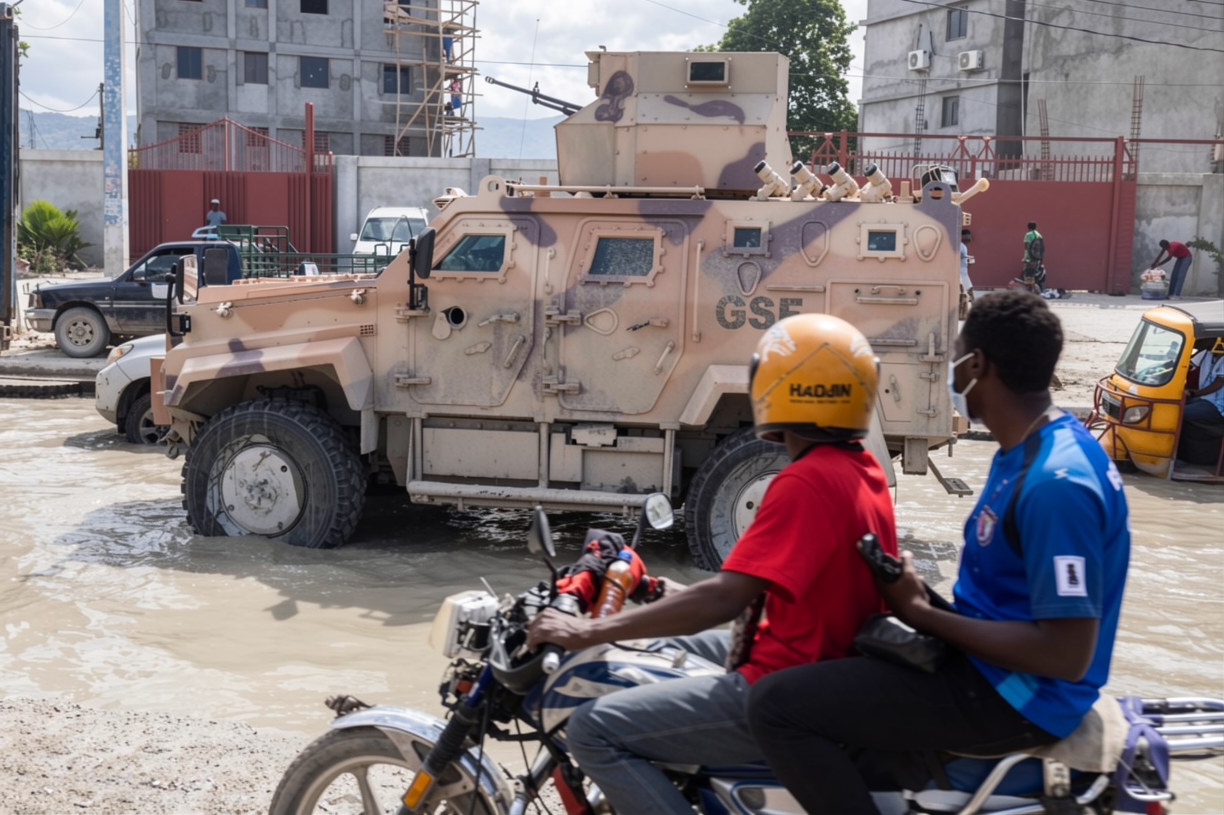
Since Salvadoran President Nayib Bukele promised Haitian gang leaders, in their own language, that he could finish them off too, something has shifted in the Cul-de-Sac Plain. Not just the armored vehicles. The masks. In two weeks, three incidents — human remains that were not those claimed, a letter from NGOs contradicted by the calendar, a letter from a gang leader written in the style of a chancellor — have revealed what everyone knows but does not say: the rifles of Croix-des-Bouquets have lawyers, pens, and connections well beyond our borders.
I. The ultimatum and the tremor
First the facts, for the truth, like justice, begins with the chronology. On Sunday, October 18, four Salvadoran aeronautical technicians integrated into the Gang Repression Force (FRG), supported by the United Nations, fall into an ambush in Santo, in the commune of Croix-des-Bouquets — a red zone contested by the 400 Mawozo and Chen Mechan. No one claims responsibility for the attack. Three days later, Nayib Bukele launches a rescue operation, addresses the gang leaders in Creole, and dispatches his special forces. By the end of October, about two thousand Salvadoran soldiers are on Haitian soil, the vast majority of whom, the UN specified, operate outside the scope of the FRG.
Then comes the scene that Greek tragedians would have called the peripety: the reversal. Wilson Joseph, aka “Lanmò Sanjou,” leader of the 400 Mawozo, who had said he was ready for battle on October 22, publishes a video a few days later proposing to discuss with Bukele, while denying any responsibility for the disappearance of the four men. On November 1, a letter in his name reaches the UN Secretary-General, António Guterres, demanding mediation. The wolf, suddenly, pleads for the flock.
Thomas Hobbes wrote it: the only passion one can count on is fear. The gang, which ruled by terror, discovers that it can also feel it. But it is around this fear that, for the past three weeks, actors who have never carried a rifle have stirred, and yet do not want the rifle to fall. This is where the open secret ceases to be a secret.
Rat konnen, chat konnen, barik mayi a ap rete la. — (The rat knows, the cat knows, and the barrel of corn remains there). Everyone knows the truth, but all act as if nothing is happening.
II. The Ring of Gyges: the fable of the invisible hands
Plato, in Book II of the Republic, tells the story of the shepherd Gyges, who finds a ring that makes him invisible. Freed from the gaze of others, he seduces, kills, usurps. Glaucon's question is dizzying: would the just man remain just if he were certain never to be seen? The geographical distance is the Ring of Gyges of our time. From Miami, Montreal, Paris, or New York, one can finance, advise, write, plead — and remain invisible to Martissant, Canaan, or Ganthier, where the dead are buried.
This is not a pamphleteer's hypothesis. American justice has already established this for this particular gang. Germine Joly, aka “Yonyon,” one of the leaders of the 400 Mawozo, has been convicted in the United States for coordinating the purchase of weapons sent to Haiti from his Haitian cell, along with accomplices based on American soil and laundering ransoms. The weapons that killed in Croix-des-Bouquets were bought in Florida; the money from kidnappings traveled the same route in the opposite direction. The gang has territory in Haiti, but its logistics have a passport.
The Haitian diaspora — should it be emphasized? — is primarily the first benefactor of this country: its transfers support millions of families, its doctors, teachers, and engineers carry the name of Haiti with honor. It is precisely for this reason that one must name the minority that dishonors it. Because Haitian organized crime has learned what all mafias know: the rifle holds the neighborhood, but it is the pen that holds the protection.
Bat chen an, tann mèt li. (Strike the dog and wait for its master). It is by touching the instrument that one sees the one who holds it appear.
The proverb states exactly what the sequence of October has shown. As soon as the blows began to fall on the 400 Mawozo, the masters emerged from the shadows — not armed, but in statements, open letters, and
