

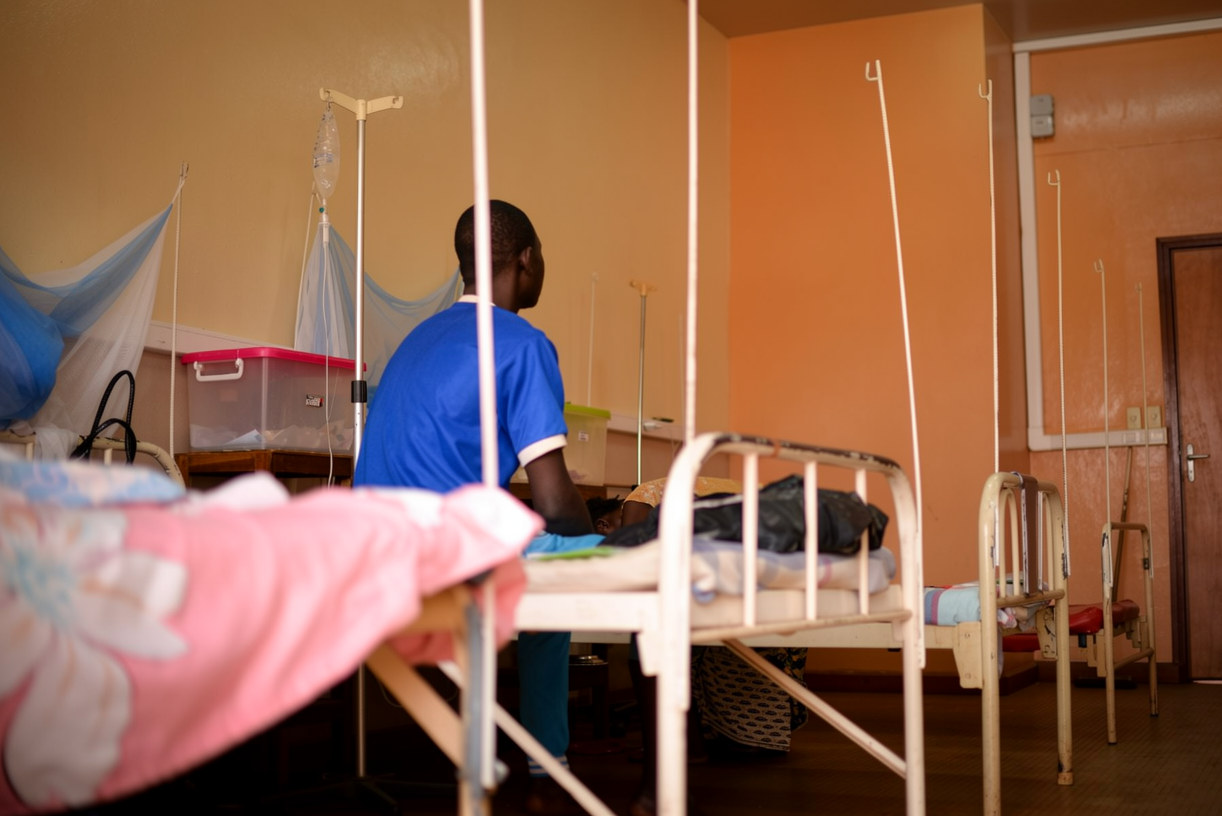
Every human being has the right to the care necessary for the preservation of their life and dignity, regardless of their origin, social status, or place of residence. However, the existence of a service does not guarantee its accessibility. In several regions of the world, armed conflicts, criminal violence, and the weakening of institutions have made geography an additional obstacle to the exercise of this right. This reality invites an examination of the relationship between territory, mobility, and health justice.
Territory, a Source of Health Inequalities
Health inequalities are often associated with income, education, or the availability of infrastructure. However, territory itself is also a major determinant. Power relations, investment choices, the concentration of infrastructure, and the distribution of public services determine the resources that populations can access. In contexts of institutional fragility, this dimension becomes particularly evident.
The Haitian experience highlights the territorialization of rights. While the right to health remains normatively recognized, its effective implementation varies significantly by territory. Difficulties in accessing care occur within a broader context marked by rapid urbanization, the weakening of public institutions, the expansion of armed groups, and the progressive fragmentation of state authority. The concentration of major administrative, economic, and health functions in the West Department has notably created a strong dependence on certain urban centers.
Barriers, armed confrontations, and territorial control exercised by different groups considerably alter mobility conditions. The transfer of patients to higher-level facilities is one of the foundations of any modern healthcare system. However, territorial fragmentation profoundly disrupts these mechanisms. The network logic on which the continuity of care depends weakens. The health crisis thus feeds off the security crisis.
The crisis in Mirebalais is a revealing example. The Mirebalais University Hospital played an important role in the regional organization of care, particularly through its hospital, specialized, and training functions. Its closure in 2025 altered referral pathways, increased pressure on other facilities, and imposed new constraints on patients who depended on its capabilities. The problem thus exceeds the situation of a single city: it concerns the reconfiguration of an entire regional care network.
The consequences are particularly significant for patients. Institutional reorganization is insufficient to restore previous accessibility. In a functional healthcare system, distance usually represents a manageable logistical constraint. In Haiti, distance becomes a risk factor that can directly influence the clinical outcome of an illness or medical emergency. How can the right to health be guaranteed in territories where the state no longer ensures the basic conditions for movement and protection?
Different Crises, the Same Difficulty: Accessing Care
This situation extends far beyond Haitian borders. In Sudan, confrontations and population displacements have severely disrupted the functioning of health facilities. In April 2026, the World Health Organization (WHO) estimated that 21 million people were deprived of access to health services and that 37% of the country's facilities were no longer operational. In eastern Democratic Republic of the Congo, an assessment by the International Committee of the Red Cross conducted in September 2025 reported medicine shortages in 85% of the examined facilities and staff departures in nearly 40% of them. In Myanmar, confrontations and forced displacements also complicate access to essential services. The causes, responsibilities, and historical contexts differ profoundly between these countries. However, their comparison reveals that violence can deprive populations of care.
Access to care increasingly depends on geographical, security, and institutional factors that escape the will of patients. For pregnant women with obstetric complications, time remains a crucial factor. Children suffering from severe acute malnutrition face similar challenges. Hypertension, diabetes, renal failure, or cardiovascular diseases require regular monitoring and constant access to medication. The progress made over the last few decades in managing people living with HIV relies on the regularity of antiretroviral treatment intake.
Territorial constraints also affect the supply of care and the ability of professionals to reach their workplaces. Facilities depend on regular supplies of medicines, consumables, blood products, equipment, and energy resources, as well as the presence of qualified personnel. Health vulnerability thus results from a double disruption: patients face more difficulties in reaching services, while services have fewer resources to meet their needs.
Medical Justice Begins Before the Hospital
Medical ethics relies on justice, respect for the person, and the obligation to seek their well-being while avoiding harm. In a healthcare system based on justice, priority should be determined by the severity of needs, the urgency of the situation, and therapeutic possibilities. The principles of beneficence and non-maleficence become difficult to apply when security conditions compromise medical interventions.
Individuals with financial resources, support networks, or greater mobility options can circumvent obstacles that others face. The ability to adapt itself becomes a potential source of health differentiation. The communities most affected by insecurity are often those with fewer economic, social, and institutional resources. Territorial obstacles thus reinforce pre-existing inequalities. Equity does not mean treating all individuals identically, but recognizing differences in needs and the barriers that prevent certain groups from effectively benefiting from services.
Two patients with comparable needs may experience very different pathways because one lives in an accessible area and the other in a territory subject to movement restrictions. The latter risks never reaching the facility. This is not medical triage but territorial filtering that occurs before any clinical assessment.
Dignity cannot therefore be reduced to the quality of treatment given to patients once admitted to a facility. Respecting patient autonomy presupposes that a person can make informed decisions regarding their health. When available options are determined by violence or the inability to move, we must distinguish true consent from decisions made due to a lack of alternatives. The principle of beneficence is also put to the test. The existence of a medical solution does not guarantee its effective implementation.
Non-maleficence raises equally important questions. Delays in treatment, therapeutic breaks, and unresolvable referral issues sometimes lead to predictable and avoidable harms. These harms do not result from classical medical errors. Yet, their consequences for patients remain very real. Lastly, dignity implies recognition of the intrinsic value of each person. When certain populations are excluded from essential services, this recognition becomes incomplete. In this sense, the crisis extends far beyond the domain of health to touch upon the foundations of citizenship.
The Limits of Humanitarian Action and the Responsibility of Institutions
Humanitarian assistance plays a crucial role when conflicts and prolonged crises weaken health systems. It helps support facilities, provide medicines, organize certain interventions, and respond to urgent needs. However, humanitarian organizations remain dependent on security conditions, movement possibilities, and available funding. Their interventions may mitigate the consequences of a crisis without removing the causes that prevent populations from receiving care.
The modalities of funding and evaluation also deserve scrutiny. Projects are usually organized around defined periods, territories, and objectives, while needs can evolve quickly with movements and changes in security situations. This distinction is important because prolonging assistance does not mean restoring sustainable access. Exceptional measures must protect populations without becoming a permanent substitute for public responsibilities.
Ensuring universal health coverage requires going beyond the mere question of the availability of facilities and financial protection. This requirement engages health institutions, public authorities, and actors responsible for protecting populations. It reminds us that the right to health cannot be isolated from the security and governance conditions that enable its exercise.
Marline GRAND JEAN
Consultant in development, security, education, strategic partnerships, and resource mobilization | Specialist in Haiti and the Caribbean Email: marlinebgrandjean@gmail.com
