

While informality affects more than eight out of ten workers and social coverage remains marginal, the hypothesis of an unemployment benefit deserves serious examination. Beyond protecting households, it can become a tool to encourage employees to demand formalization and to incentivize employers – including those who do not contribute or who prefer to make false declarations – to meet their obligations. It also offers a unique opportunity to improve data collection on employment and payroll.
Haiti is experiencing a multidimensional crisis. Persistent poverty, precarious jobs, economic collapse, widespread insecurity: the lines of fracture are multiplying. For thousands of families, losing a job no longer just means a decrease in income; it represents an immediate shift into daily survival.
The figures confirm the scale of the phenomenon. According to estimates from the International Labour Organization (ILO) and recent surveys, more than eight out of ten Haitian workers operate in the informal economy. Only 8.2% of the population is covered by social security, according to data cited by the State University of Haiti (UEH), the National Old Age Insurance Office (ONA), and the World Bank in 2025. The current system does not provide for unemployment coverage. This institutional gap explains why the slightest job loss turns into a social catastrophe.
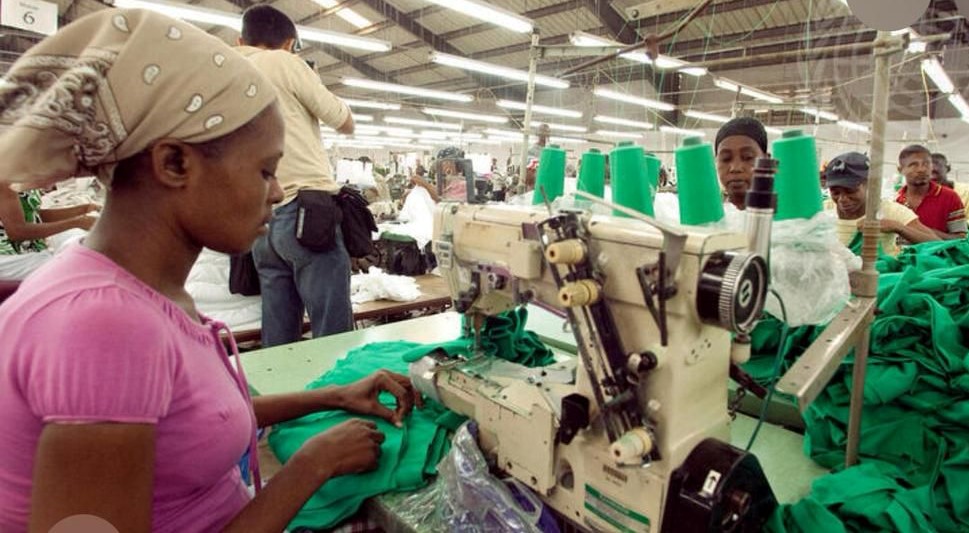
A mother of three, whom we will call Sarah, embodies this vulnerability. After losing her job at a textile factory, her situation worsened due to violence in her neighborhood. Deprived of a stable income and safety net, she survives through odd jobs. With a benefit covering even a reasonable percentage of her former salary for six months, she could have avoided resorting to informal loans at usurious rates and kept her children in school. Her case is not isolated; it illustrates the daily life of many Haitian households.
Reflections are underway within the Ministry of Social Affairs and Labor (MAST) regarding the outline of a future unemployment insurance system, as part of the broader reform of social security supported by the ILO. Some institutional actors are discussing the creation of a National Unemployment Insurance Office (ONAC), which is still in the brainstorming stage. Such a system would be contributory (employers and employees would contribute) and would guarantee a monthly allowance to employees after job loss. The ILO is currently assessing Haitian legislation against the backdrop of Convention No. 102 on minimum standards of social security.
But beyond direct worker protection, a well-designed unemployment benefit can become a lever for formalization. For employees, knowing that they can benefit from an allowance in case of job loss creates a strong incentive to demand from their employer an actual declaration and the regular payment of contributions. The right to the benefit becomes a tangible advantage linked to formality.
For employers, in an environment where some competitors operate informally, many hesitate to bear the cost of formalization alone. A system of unemployment insurance, especially if accompanied by controls and tax or administrative incentives for compliant companies, alters this calculation. The contribution no longer appears as an isolated burden, but as the key to accessing a protection system that stabilizes the workforce and reduces social conflicts.
A progressive system, with a regularization period and targeted sanctions, can encourage lagging employers to comply. Access to certain public contracts, tender opportunities, or support programs could be conditioned on proof of contribution to unemployment insurance and social security.
This system would also allow targeting those who do not contribute or who prefer to make false declarations. By cross-referencing tax data, payroll declarations, and ONA records, it would become possible to identify discrepancies between actual staff and declared staff. Companies that under-report their employees or artificially inflate their costs to reduce their contributions would then be more easily identified. The threat of losing access to public markets or certain tax advantages would provide effective deterrence.
To be viable and serve as an incentive for formalization, such a system should be built on a pilot phase focused on identifiable formal sectors (textile, hospitality, public service) while leveraging the modernization efforts of the ONA. It should use traceable digital payments via MonCash and Natcash, or a local bank to reduce intermediaries and misappropriation risks. Its funding would be diversified: contributions from the formal sector, state budget support, and backing from international partners. Finally, it would require a rigorous anti-corruption framework, aligned with the recommendations of the IMF, which highlighted the need to "mitigate corruption risks in revenue administration."
Some concrete mechanisms could enhance the incentive effect: conditionality of access to public markets for only those companies that are up to date with their social contributions; targeted tax or administrative advantages for formalized and contributing companies; transparency and information for employees through an application or portal providing access to contribution histories by employer, allowing each worker to verify if their employer is indeed contributing on their behalf.
The establishment of an unemployment benefit would also provide a unique opportunity to improve data collection on employment and payroll. Today, official statistics struggle to capture the reality of the labor market, due to the extent of informality and weak reporting systems. By requiring employers to declare their employees to benefit from the scheme, digitizing contribution flows, and interconnecting databases (ONA, tax administration, customs, trade registers), the state could obtain a much clearer view of formal employment, wages paid, and social contributions. This better understanding would be valuable for designing more targeted public policies and assessing the impact of reforms.
Public works, often mentioned as an immediate response to poverty, have their utility. But they are temporary, localized, and often non-qualifying. They do not replace direct protection for households affected by job loss. An unemployment benefit, coupled with training counterparts, appears as a more targeted and protective option, while sending a clear signal: formalization opens rights; informality leaves workers without a safety net.
Haiti is at a turning point. The unemployment benefit will not solve everything. But if well thought out, properly framed, and adequately funded, it could represent a first step towards a more dignified and effective social protection system, while gradually pushing the economy towards greater formality. The ONAC exists only on paper for now. The question is no longer whether Haiti can afford an unemployment benefit, but whether it can still afford to do nothing – for the protection of its workers, for structuring its economy, and for building reliable data on its labor market.
