

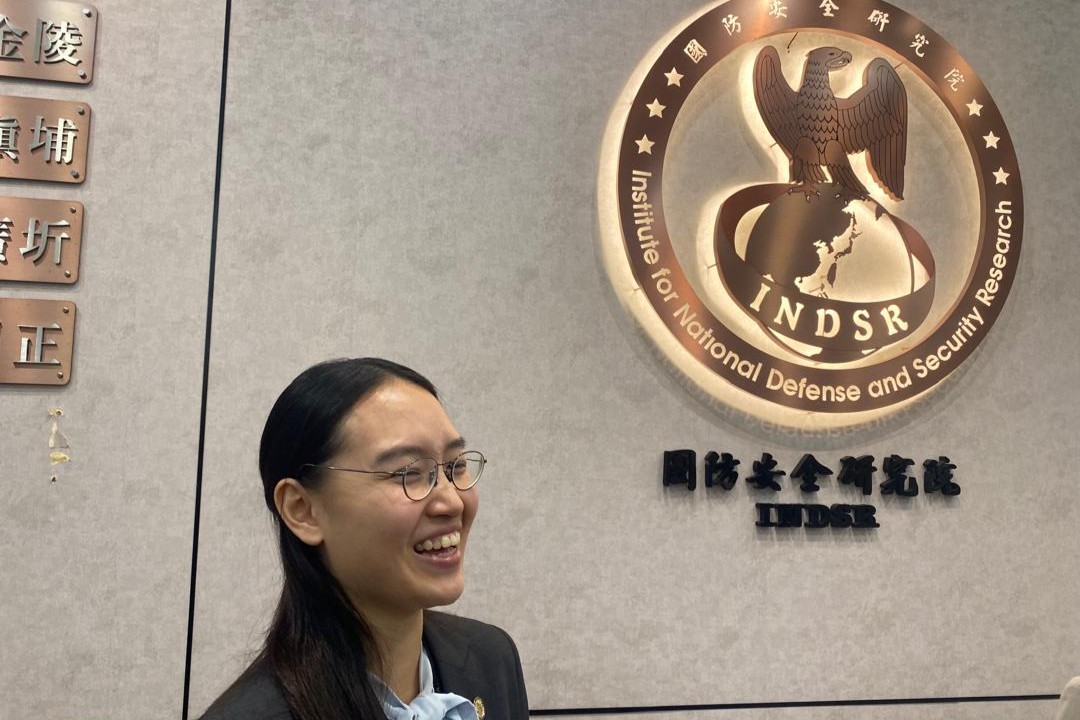
Discovering the Institute for National Defense and Security Research
TAIPEI — The issue of security in Haiti was central to the discussions during our visit to the Institute for National Defense and Security Research (INDSR) in Taipei, where we were able to learn about Taiwan's experience in the fields of defense, security, crisis management, and new technologies.
The Institute for National Defense and Security Research (INDSR), based in Taipei, was officially inaugurated on May 1, 2018. It is an independent, non-partisan, nonprofit organization dedicated to analyzing Taiwan's security and defense issues.
The institute aims to produce strategic analyses and policy recommendations on national defense, international security, Chinese political and military affairs, non-traditional threats, cybersecurity, as well as new forms of warfare. It also organizes international forums, promotes exchanges between researchers and policymakers, and conducts strategic simulations.
INDSR includes a Division of Defense Strategy and Resources, responsible for research on military and defense strategy, defense economics, military technologies, and geopolitical issues in the Indo-Pacific region.
Ms. Jun-Rong Lin: Security, Defense, and Cooperation with Haiti
Ms. Jun-Rong Lin, Policy Analyst at the Division of Defense Strategy and Resources of INDSR, who spoke in French, addressed the situation in Haiti as well as the potential for cooperation between Taiwan and Haiti in the areas of security, defense, crisis management, and new technologies.
According to Ms. Lin, both Taiwan and Haiti face risks related to earthquakes and other natural disasters. She explained that, considering also the security issues Taiwan faces in its region, the country has strengthened its security capabilities, particularly at the civil level.
This experience has allowed her to develop means to cope with various crises and disasters, expertise that Taiwan could potentially share with other countries facing similar situations.
When asked about the establishment of the gang suppression force in Haiti and Taiwan's possible role in this process aimed at restoring security in the country, Ms. Lin considered this issue to be primarily a diplomatic matter. However, she emphasized that Taiwan remains open to exchanges and experience sharing while expressing its willingness to assist other countries.
Specifically regarding the fight against insecurity in Haiti, Ms. Lin indicated that Taiwan has experts and experience in defense and security. She believed that personnel exchanges could be beneficial for both countries, allowing for better understanding of different realities, learning lessons, and comprehending tactics used in the defense domain.
For her, experience sharing among various countries is an important element of this cooperation.
Ms. Lin also mentioned the advancements made by Taiwan in the technological field. She specifically cited artificial intelligence as well as systems related to semiconductors. According to her, these areas also offer opportunities for collaboration and experience sharing with Haiti.
Regarding the gang suppression force currently being constituted in Haiti, Ms. Lin recalled that Taiwan is a democracy and emphasized the need, in her view, to strengthen solidarity and exchanges among democracies to better understand the situations faced by different countries. She reaffirmed that Taiwan remains open to more exchanges in this area.
Finally, addressing the issue of financial resources that could be mobilized to support security efforts in Haiti, Ms. Lin indicated that several Taiwanese agencies are already on the ground working with various countries. She stressed the importance of aid but also the necessity to develop collaborations between civil actors, different stakeholders, and official institutions.
Ms. Lin concluded by highlighting that Taiwan has a significant level of advancement in several of these areas, which, in her opinion, can serve as a basis for the development of new forms of cooperation and exchanges with Haiti.
