

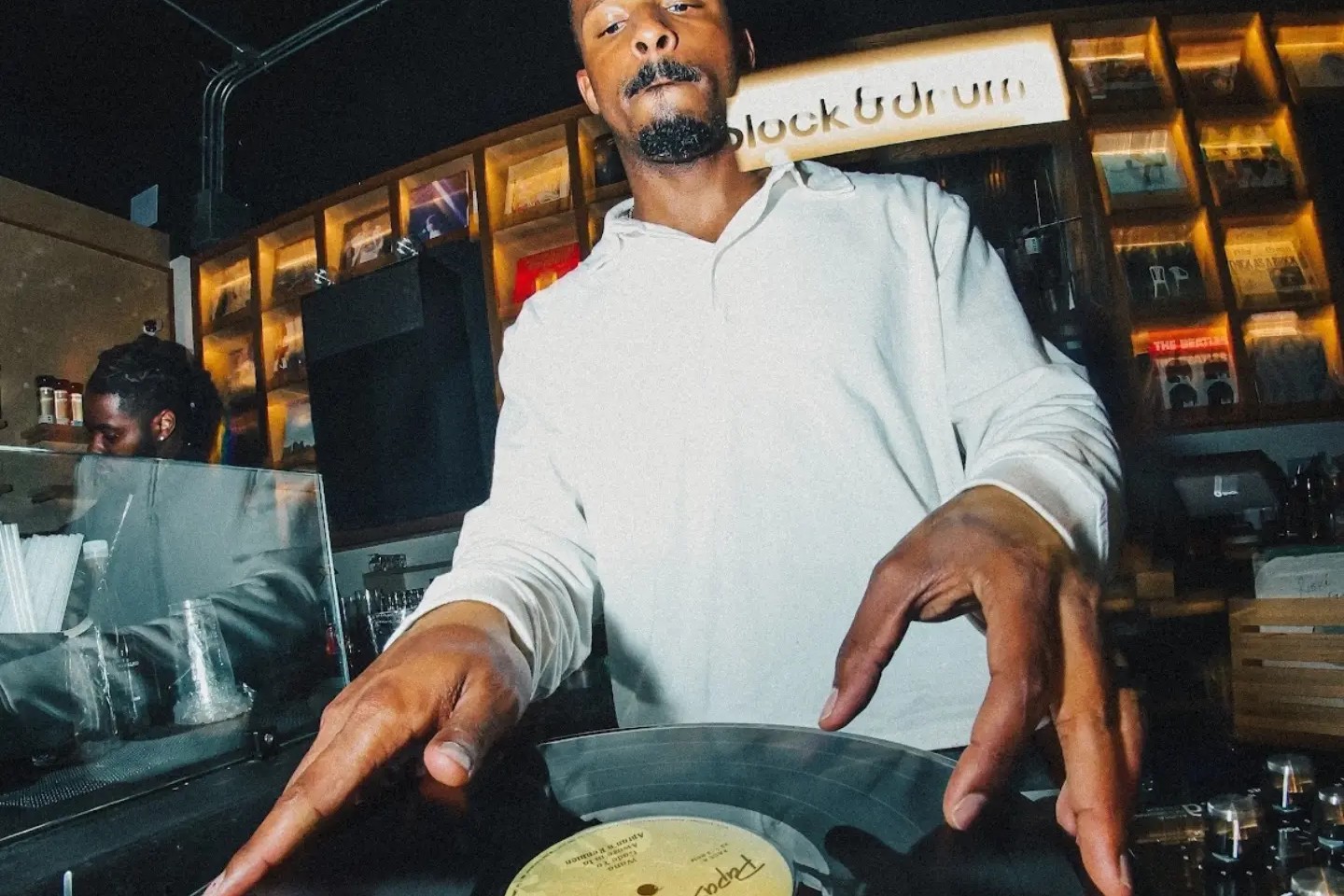
In the age of grand shows and digital prowess by disc jockeys, an authentic medium stands out: music on vinyl. Compas direct takes inspiration from various trends that invigorate its creative dynamic. Sound and voice alone are no longer enough to define the essence of music; it can, like the art of the moment, bridge cultural gaps between generations. This revolution was initiated by Patrice Espérant, a young Haitian disc jockey in his thirties, during his performances and pilgrimages within the Haitian diaspora, first in North America - in Florida, Atlanta, Philadelphia, Boston, Houston, and Brooklyn. We discovered this experience during an event hosted by this DJ in the heart of Montreal on September 10, 2026, which captivated a diverse audience spanning several generations. Patrice Espérant fully embraced this enterprise since 2024.
Compas on vinyl is a movement that goes against the current trend of modern DJs who confine themselves to digital formats. Compas on vinyl involves engraving music onto a vinyl disc commonly referred to as a “plate.” There are 78 RPM records; 45; 33; or 22 RPM. “Vinyl being a physical medium with microgrooves and a diamond (a needle), the music must adhere to the laws of physics.” We will not delve into the technical aspects of the issue, which is best left to experts. I would also advise you to conduct your own research to deepen your understanding of this aspect of the subject. “However, the ‘Vinyl’ Compas is akin to a sound often described as ‘warmer’ and retro. This requires suitable equipment that is rare, while the standard mastered Compas relies on the raw power necessary for modern sound systems and headphones.” This information is sourced from the resources available online.
Special effects, images, and technical support contribute to the music of compas direct, alongside sound and voice. Just like Joe Dwèt File, who propelled compas into a combined menu of Afro rhythms, RnB, zouk, and soca, Patrice Espérant leads us back to the roots. Indeed, the promotion of compas on vinyl, far from provoking nostalgic attitudes, rather ensures the reception of the very essence of this dance music. Live events, siwèl, and the dynamics brought by traditional DJ mastering face a challenge against the authenticity of compas on vinyl. Patrice Espérant seized this moment to add value by celebrating a double cultural tradition: retro compas direct and the vinyl medium, which has been substituted in today’s world by digital and electronic formats. It is not about prioritizing sound effects. Everything in the free play of disc jockeys fades away to focus on moderate and authentic rhythms, borne from the vinyl medium.
It is a waltz of genres linked to different eras: mini-jazz, siwèl, troubadour, konpa mamba, konpa love, konpa hounsi, the new generation, digital konpa or even funky konpa. The dances associated with these times are being revitalized; we remember the palasso, yamaha, mazda, boogie, disco, “baissez-bas,” carabinier, and bolero.
Dubbed “Haitian Vinyl Night,” this initiative enriches DJ practices while preserving the heritage of musical technology. The vinyl medium of compas direct music thus collected recalls a slice of history. It is a true mobile museum of compas direct.
The evening of September 10 sparked identity reflexes and energized intergenerational dialogue. To give a glimpse of the atmosphere, we will outline the menu, the ambience, the intercultural confluence, and the universal reach.
The Tropicana of Haiti, the Gypsies of Pétion Ville, Coupé Cloué, Zin, the Lakol group, Missile 727 of Larose, diva Emeline Michel, among others, are part of these reunions and make the audience vibrate. The audience seizes the chance to immerse themselves in the meanders of Haitian music through various moments. The listeners transform into a choir, singing, dancing, and entering a trance, carried by the faithful rendition of compas on vinyl. The music becomes body, transcending generations in a unity centered on common cultural references. Strangers from all walks of life - Antilleans, Montrealers, Moroccans, or Americans, to name just a few - join in. No barrier stands in the way of this communion atmosphere, as the music of Compas direct surpasses cultural borders. In a cosmopolitan Montreal, Patrice Espérant's performance around vinyl becomes a powerful vector for socialization and an expression of a true idiosyncrasy.
Lastly, we take this opportunity to pay tribute to André Déjean, who passed away on September 11, 2026. He was one of the first tenors of the Mini-Jazz movement in Haiti in the early 1960s. André's contribution, one of the principal figures of the Compas group “Les Frères Déjean de Pétion Ville” and an internationally renowned trumpeter, is considerable. Having made a valuable contribution to Haitian musical heritage by promoting jazzed compas, we now hope to promote the productions of this great artist on vinyl.
All our homage to the late André Déjean, whom we resurrect through the lyrics and rhythms of the Haitian standard, adapted here in a salsa style: “Latibonit.” This title is featured on the album “International,” released under the Macaya Records label in 1976. André lives on in these refrains: “Latibonit yo voye rele mwen yo di m Sole malad. Latibonit wo yo voye rele mwen yo di m Sole mouri. Mezanmi, sa fè m lapèn wo pou m antere sole.”
Bibliographic References
-Hancy PIERRE (2024), “Le Konpa dirèk, d’une musique marginale à une musique élaborée et identitaire,” in Le National of February 23, 2024
-Hancy PIERRE (2025), “Le Compas direct au rythme du raboday électronique,” in Le Nouvelliste of September 11, 2025.
-Jerome Paul Eddy LACOSTE (2025), “70 ans du Konpa Dirèk: en réponse au professeur Hancy PIERRE” in Le National of November 5, 2025
