

I. One Affair, Two Accusations
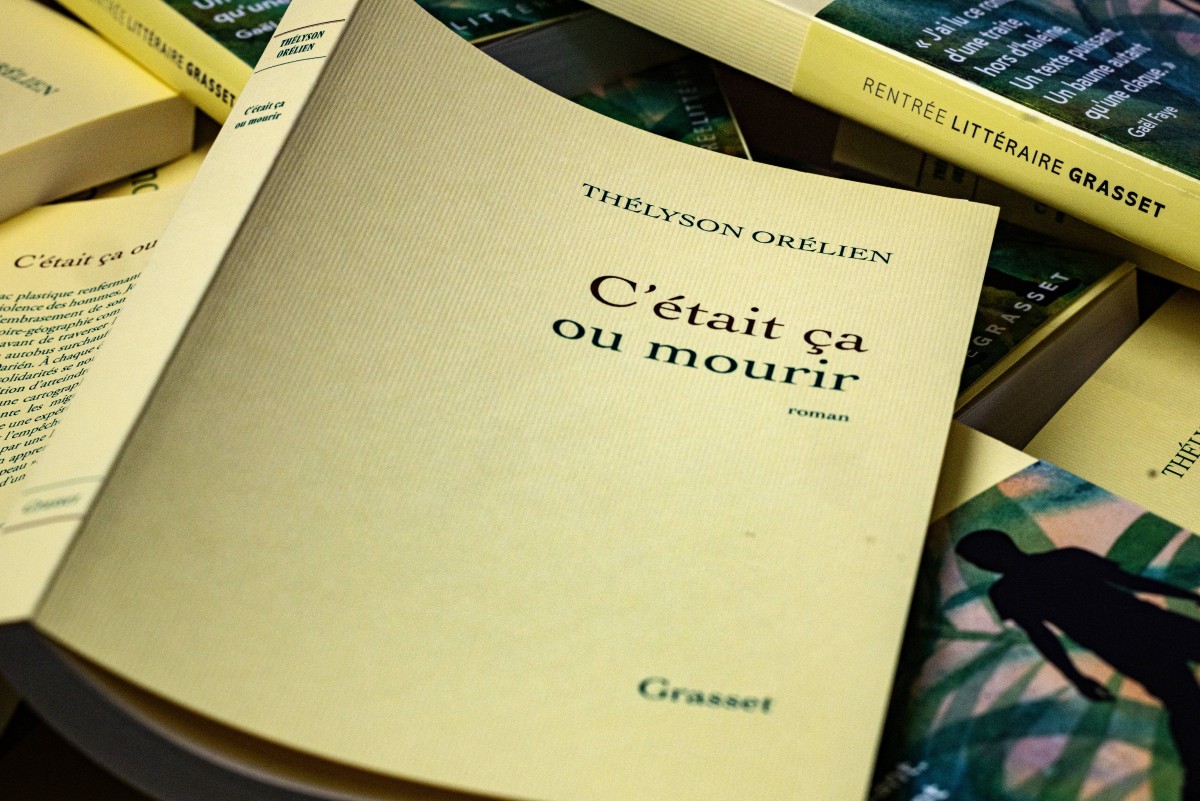
On September 21, 2026, a previously confidential account, "Balance ton Claude," accuses Thélyson Orélien of having "almost entirely" written his novel C'était ça ou mourir with an artificial intelligence, based on an analysis using the Pangram detector. Four days later, the Académie Goncourt removes the novel from its selection, citing two very different reasons: documented instances of plagiarism dating back to 2012-2014, which the author himself does not seriously contest, and "convergent analyses" regarding the use of AI, never named, relying on a tool whose reliability remains actively contested.
The confusion between these two accusations, one established and the other disputed, has been one of the central traps of this affair. A documented fact and a statistical suspicion should never weigh the same in a single verdict.
II. Who Accuses: From Anonymity to Samuel Fitoussi
On September 25, essayist Samuel Fitoussi, a columnist for Le Figaro, acknowledges on X that he is part of the "collective project" behind the accusing account, after having denied it to AFP in previous days. Other members of the collective have, to this day, not revealed their identities. Mediapart documents the uncritical relay of the message by other right-wing and far-right voices, including Le Figaro journalist Paul Sugy and the news site Valeurs actuelles.
This is no longer a supposition, but it also does not allow for everything to be reduced to a concerted plot: Fitoussi himself places his approach within a concern about the future of writing in the face of AI, which does not prevent others in the relay from having other motives, more directly political.
III. A Chain of Solidarity, and Its Internal Tensions
In response to the accusation, a mobilization is organized. Jean-Durosier Desrivières launches the operation Texte en Action, with C3 Éditions, to distribute the novel for free to Haitian schoolchildren and students. Robert Berrouët-Oriol publishes a frontal critique of this operation, which he deems theoretically naive, while also offering, in a separate text, a nuanced defense of the reflex of identity-based solidarity, a defense that Dr. Paultre Pierre Desrosiers later turns against him, pointing out that his own accusatory vocabulary does not respect the same caution he demands from others. An anonymous letter, widely circulated, refuses to choose between leniency and accusation. A column by Aly Accacia, on AlterPresse, warns against the temptation to place the weight of a collective symbol on a single man.
This array of reactions, however disparate, conveys one common message: a community that lacks its own circuit to defend, promote, and arbitrate its own works finds itself improvising, in urgency, a collective defense every time one of its writers is attacked from the outside.
IV. Ronald Paul: The Real Lesson
In his response to this synthesis, Ronald Paul proposes the idea that best closes the debate: Haitian literature is strong enough to assert itself on its own, and energy should now go toward building our own promotional mechanism rather than seeking recognition from those who, incidentally, make us suffer.
This is a lesson that far exceeds the Orélien case. It poses a simple question: what do we, as a nation, have to distinguish, fund, and circulate our own writers, independent of the verdict of a Parisian prize or a statistical detector? The answer, today, is: almost nothing institutional. But a proposal already exists, written even before the affair broke out.
V. A Proposal Already Here: Ten Cents for Haitian Literature
Burning oil, igniting culture
Haiti consumes tens of thousands of barrels of petroleum products every day. Gasoline powers engines, diesel fuels generators, and kerosene lights homes that are not reached by EDH. And in the meantime, a Haitian novelist publishes at his own expense, a poet in Creole cannot find a publisher, and the national theater survives by miracle. Between these two realities, no one has yet linked the thread. It is time to do so.
What oil brings in, and what it could do
Haiti imports all of its petroleum products. It produces nothing, refines nothing. Yet, according to data from the National Authority for the Regulation of the Energy Sector (ANARSE), the country consumed, on average, around 26,000 barrels per day in the years preceding the 2022 crisis, or nearly 800,000 barrels per month. Even in today's difficult conditions, we hover around 11,000 to 15,000 daily barrels.
Let’s do the simple math. A barrel contains 42 gallons. At 15,000 barrels per day, that’s 630,000 gallons that transit each day on the territory. If the state levied 10 cents of gourde per gallon on all fuels—gasoline, diesel, fuel oil—it would represent, at the current rate, an annual fund of several tens of millions of gourdes. Not a fortune. But enough to change the face of Haitian literary life.
This levy would not be an additional tax burden on the ordinary consumer. It would be integrated into the existing complex and opaque structure of excise duties. Ten cents per gallon is what we lose in the inaccuracy of a poorly calibrated pump. Conversely, it is what could reward each year the best Haitian novel, the best collection of poetry in Creole, the best play in French.
An act of cultural sovereignty
One might object: why oil? Because oil is transversal. It crosses all layers of the Haitian economy, from public transport to the large industrialist, from the fisherman to the ministry's generator. By linking it to a cultural fund, we are sending a political message in the strong sense of the term: culture is not a luxury reserved for times of prosperity. It is a vital function of the nation, financed by the nation itself, in its own currency.
Because the literary prizes from this fund would be denominated in gourdes. Not out of naivety regarding the chronic depreciation of our currency, but as a principle. A nation that cannot honor its writers in its own currency has already renounced something essential. The indexing of allocations on a mechanism reviewable every two years by an independent council would ensure the real substance of the prizes without relinquishing their symbolic anchoring.
The gourde as a cultural unit of account: it is a quiet act of resistance against the dollarization of imaginations.
What others do
Haiti would not be inventing anything. It would join a long global tradition of allocating a portion of revenues from natural or industrial resources to fund cultural life.
Norway feeds its Sovereign Fund with oil revenues and dedicates a significant part of its cultural budget to national literature, including translation and publishing. Mexico and Venezuela have, at various times, established cultural funds linked to PEMEX and PDVSA. Closer to us, Trinidad and Tobago partially finances its Caribbean literary prizes through mixed public-private mechanisms. This is not utopia. It’s ordinary cultural administration.
What would be original in the Haitian model is precisely the association between the state, via the Ministry of Economy and Finance (MEF), and the private industrial sector, represented by the Haitian Industrialists Association (ADIH). By contributing 25% of the fund dedicated to prizes, ADIH would not be engaging in philanthropy. It would assume a historical responsibility: that of a national industry investing in the symbolic capital of the country that feeds it.
The Proposal
Here is what we propose concretely.
The Haitian state creates, by legislative or decree means, a National Fund for Languages, Art, and Creation, funded by a levy of 10 cents of gourde per gallon on all imported petroleum fuels distributed across the national territory.
This fund is managed by a mixed council composed of representatives of the state, the ADIH, and, crucially, cultural personalities at the end of their active careers: writers, artists, researchers, whose moral authority is established and whose personal ambitions are calmed. This council has a statutory reserve covering at least two full cycles of awards, non-mobilizable without a qualified quorum, shielded from government budget emergencies.
The ADIH contributes annually 25% of the literary prize section's budget.
The fund finances three prizes. The Poetry Prize, awarded annually, rewarding a collection in Creole and a collection in French, two winners, two languages, no hierarchy. The Novel or Theater Prize, awarded annually, open to both languages under the same principles. The National Literary Prize, biennial, crowning a work, poetry or novel, with a higher endowment, an exceptional prize whose biennial wait confers the solemnity it deserves.
All endowments are denominated in gourdes, with a guaranteed floor and a reviewable indexing mechanism every two years.
This is not a dream. It’s a mechanism. Ten cents per gallon, and Haiti finally has a national literary policy worthy of its tradition. A tradition that spans from Oswald Durand to René Philoctète, from Marie Vieux-Chauvet to Frankétienne, from Georges Castera to Yanick Lahens. A tradition that deserves better than mere survival.
VI. From Reaction to Construction
The Orélien affair and the proposal for the oil fund apparently have nothing in common: one is a media crisis of a few days, the other a fiscal mechanism thought out over the long term. But they respond to the same question, posed at two different scales. In urgency, solidarity is organized: Texte en Action, C3 Éditions, the positions taken by Desrivières, Berrouët-Oriol, Desrosiers, Accacia—but it is organized each time from scratch, without a pre-existing device, without reserve, without an institution that could have absorbed the shock rather than improvising it.
The National Fund for Languages, Art, and Creation is a cold response to what the Orélien affair revealed hotly: our literature does not need the imprimatur of a Parisian academy nor the validation of an AI detector. It needs its own prizes, endowed in its own currency, managed by its own institutions. Spontaneous solidarity and institutional mechanism do not oppose each other; they complement each other: one responds to urgency, the other prevents the next.
