

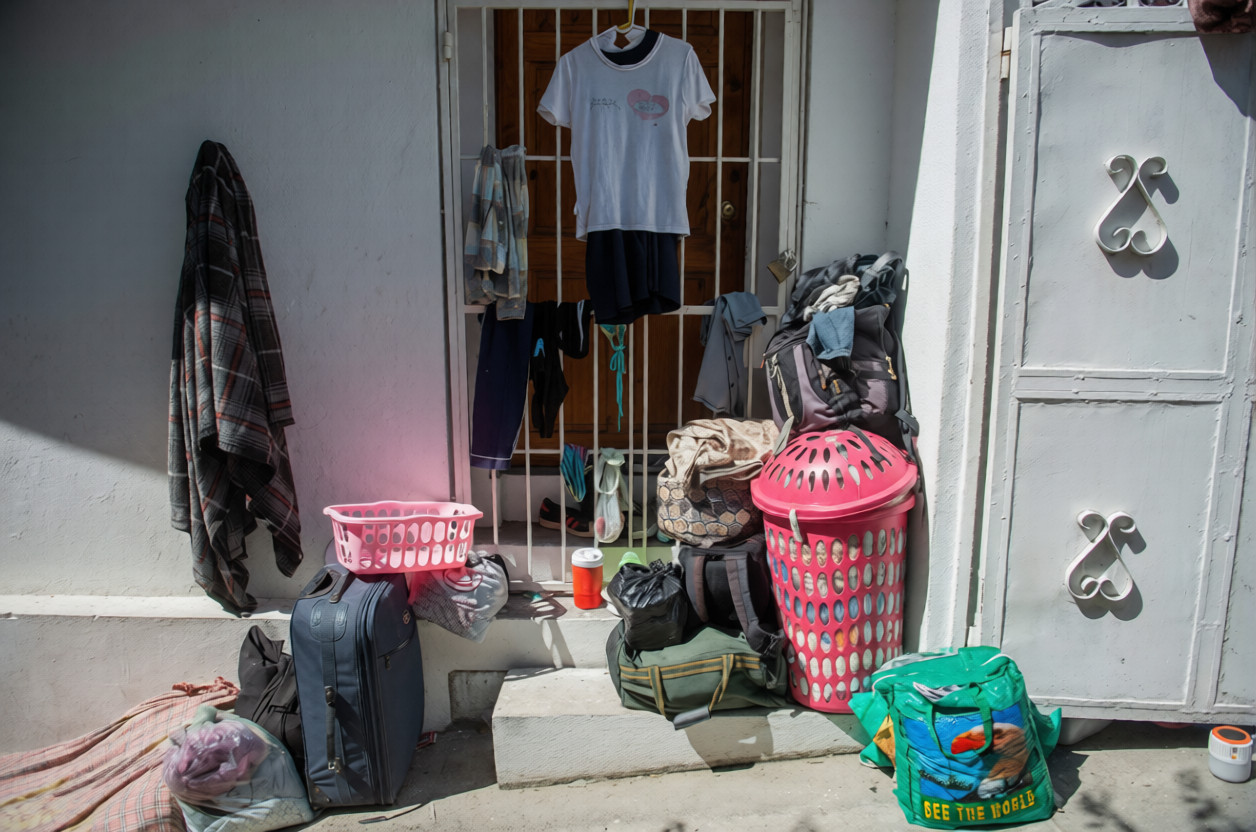
“This text is based on a true story, emblematic of a reality that many families in Haiti are experiencing today.”
There are crises that can be measured in numbers: inflation, exchange rates, the number of displaced persons. And then there are those that escape statistics, but slowly erode the social fabric. In Haiti, the gradual dislocation of the family is one of the most worrying manifestations.
Today, a reality imposes itself with unprecedented brutality: thousands of Haitian families now live scattered across several territories. The father remains in Haiti, often constrained by a lack of material and financial means or by attachment to what remains. The mother, for her part, has found refuge in Canada, sometimes after an uncertain migration journey. As for the children, many find themselves in the United States, benefiting from temporary statuses such as TPS, in a constant wait for a more stable tomorrow.
This configuration is not the result of choice. It is the direct consequence of an environment that has become unlivable for a large part of the population. Widespread insecurity, marked by the expansion of armed groups, has turned entire neighborhoods into lawless zones. Homes are burned, businesses looted, lives overturned in a matter of hours.
But beyond material losses, another tragedy is unfolding: that of memory and identity. A house that burns is not only walls disappearing. It is memories, family archives, essential reference points that vanish. In an instant, decades of effort can be reduced to nothing.
For more than twenty years, many families had patiently built a certain stability. Through remittances from the diaspora, constant sacrifices, and strict economic discipline, they had managed to build assets, however modest. Today, this fragile balance is collapsing under the weight of violence and uncertainty.
This geographic dispersion also comes at a considerable human cost. The Haitian family, traditionally built on proximity and solidarity, now finds itself fragmented. Relationships are maintained at a distance, through phone screens and messaging applications. Video calls replace shared meals. Money transfers attempt to compensate for absence, without ever fully succeeding.
The psychological consequences are profound. Parents and children experience prolonged, often indefinite separation. The lack of reference points, loneliness, and anxiety become everyday realities. An entire generation is thus growing up between several cultures, but sometimes without a true sense of belonging.
On the economic level, this transformation is just as concerning. Where diaspora resources once served to invest in real estate or small businesses, they are now primarily devoted to survival: migration costs, emergency assistance, expenses related to settling abroad. This shift significantly reduces local investment capacity and slows any development momentum.
Thus, a vicious cycle sets in: the crisis drives migration, migration weakens the economic fabric, and this weakening in turn fuels the crisis. Faced with this situation, a fundamental question arises: to what extent can a society rebuild itself when its basic units—the families themselves—are fragmented?
The gradual normalization of this reality may be the most worrying aspect. What once was exceptional is tending to become the norm. Family separation, once experienced as a temporary sacrifice, is now becoming long-term, even permanent.
It therefore becomes urgent to rethink priorities. The security issue, of course, remains central. But it cannot be dissociated from a broader reflection on rebuilding social ties, on the need to recreate living conditions that allow families to stay together.
Because beyond infrastructure and economic indicators, it is indeed family cohesion that constitutes one of the essential pillars of any society. And when it cracks, the entire structure wavers.
Haiti is not only losing material goods or human resources. It risks silently losing what has always been its strength: the solidity of its families.
